Education and Research

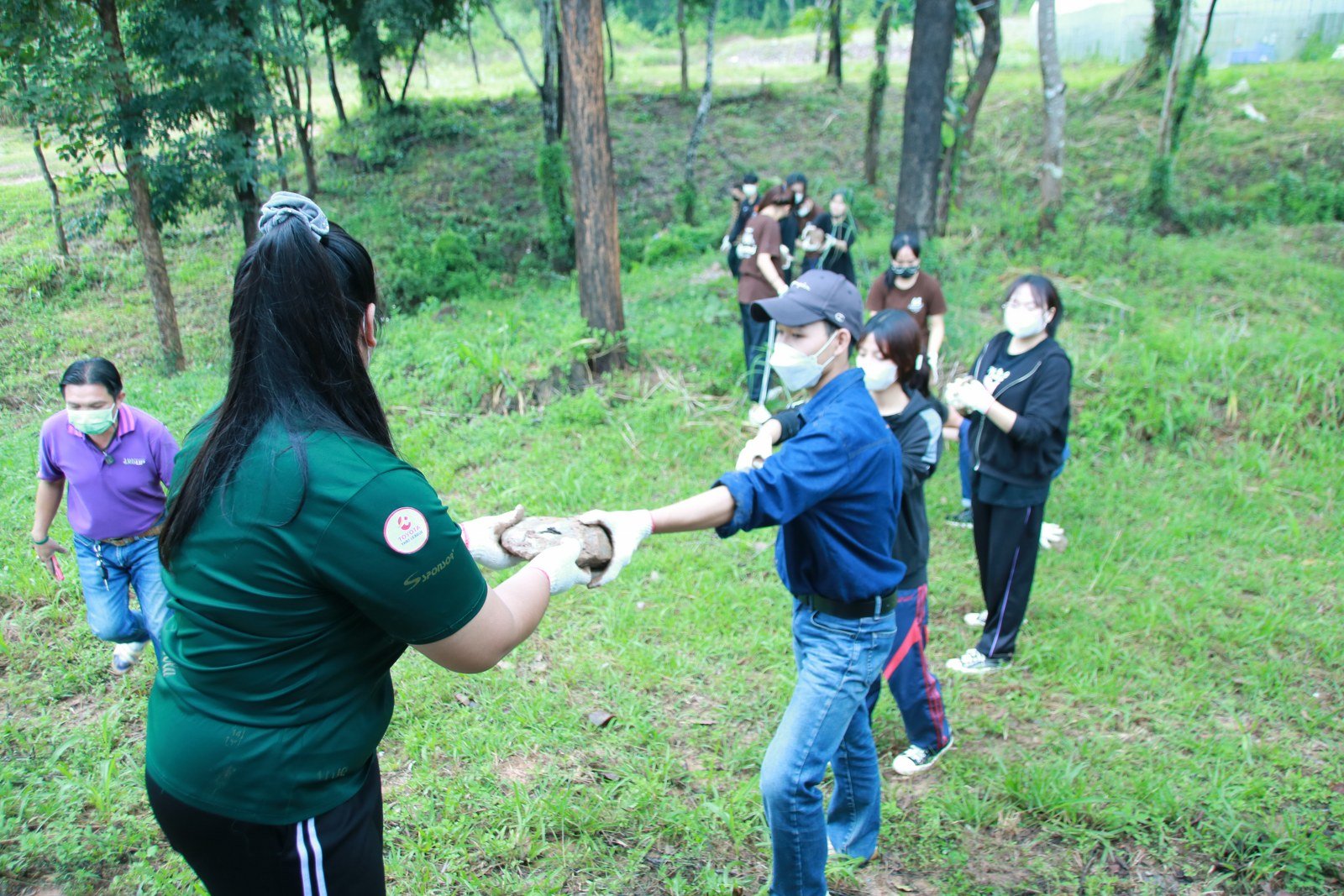
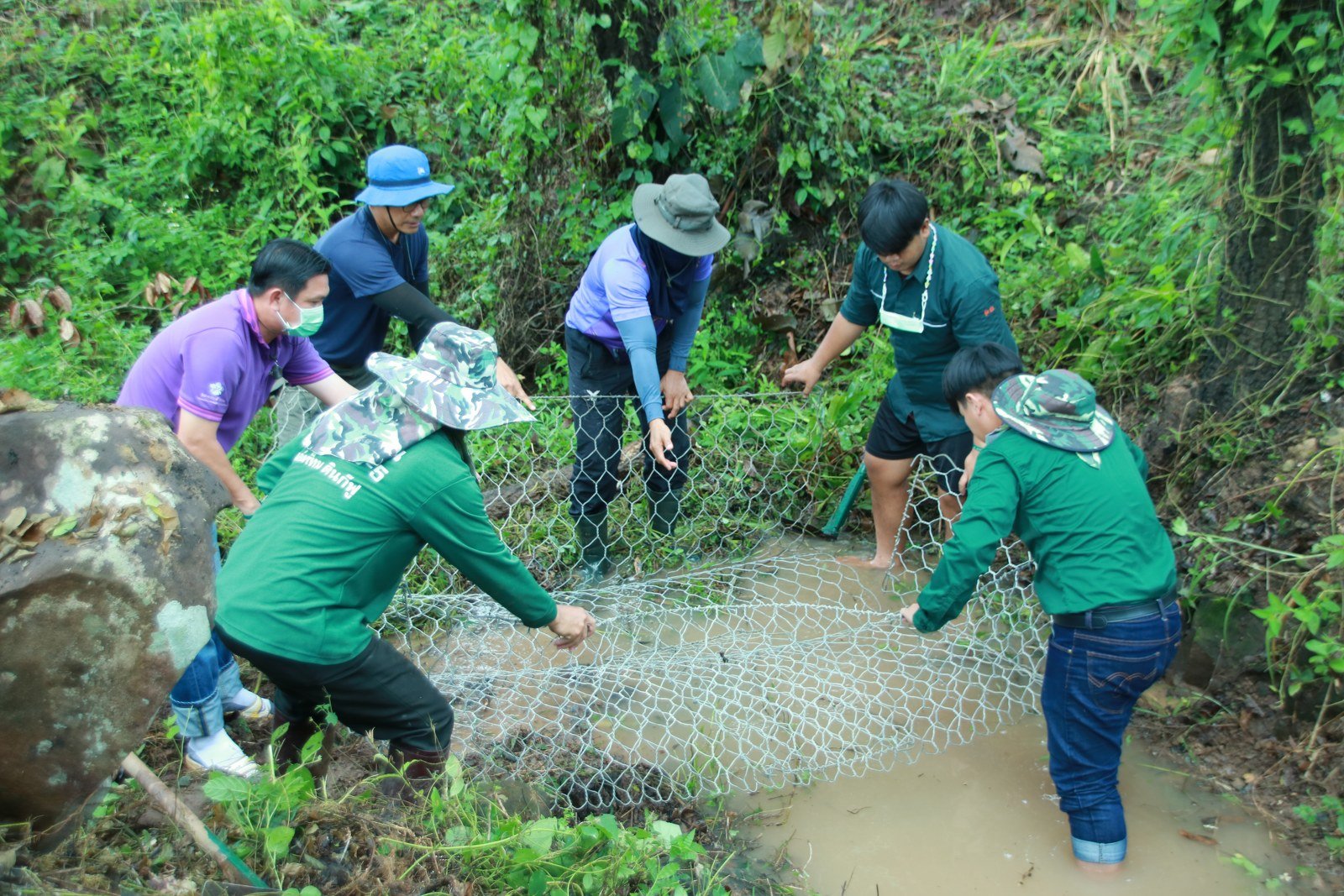
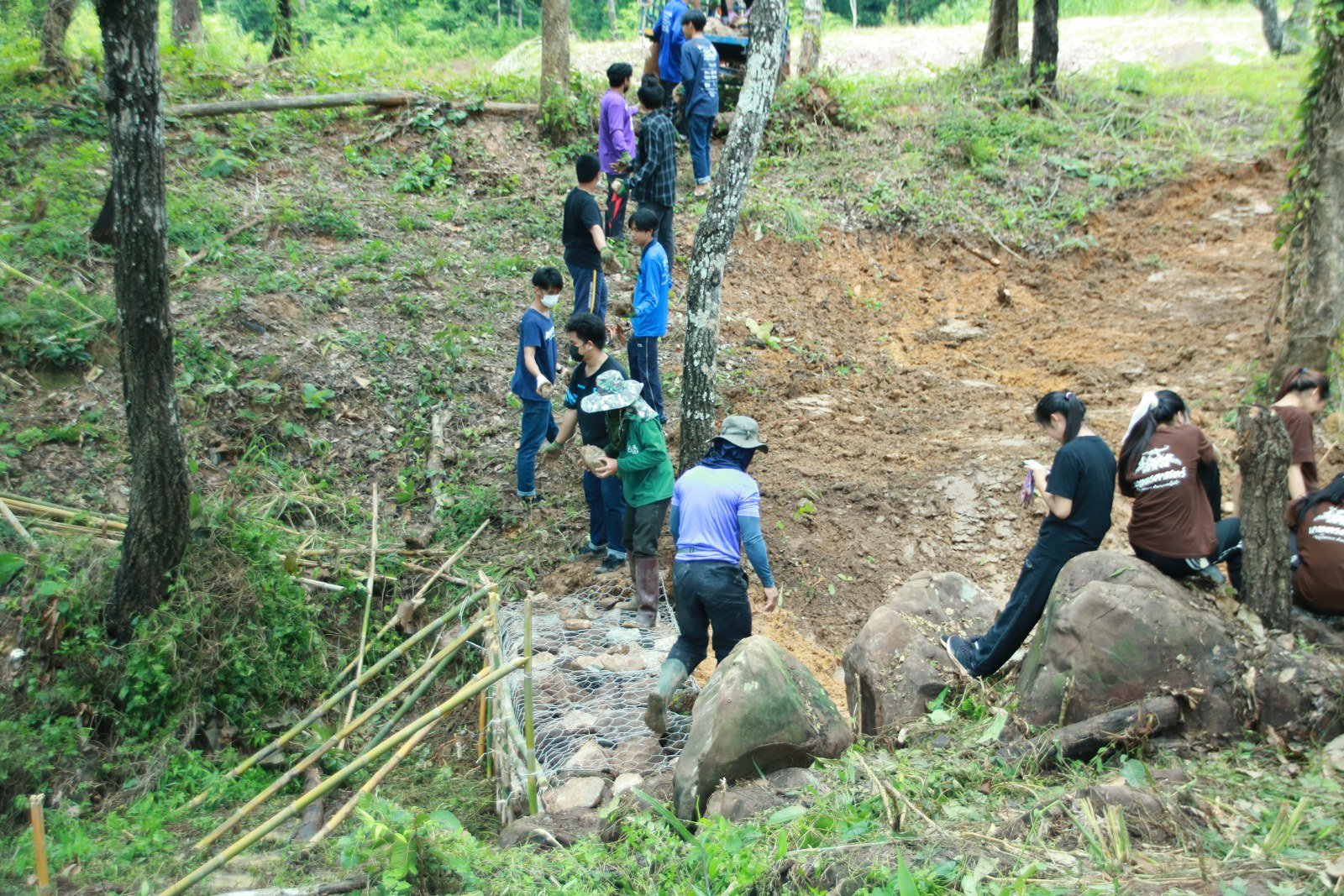
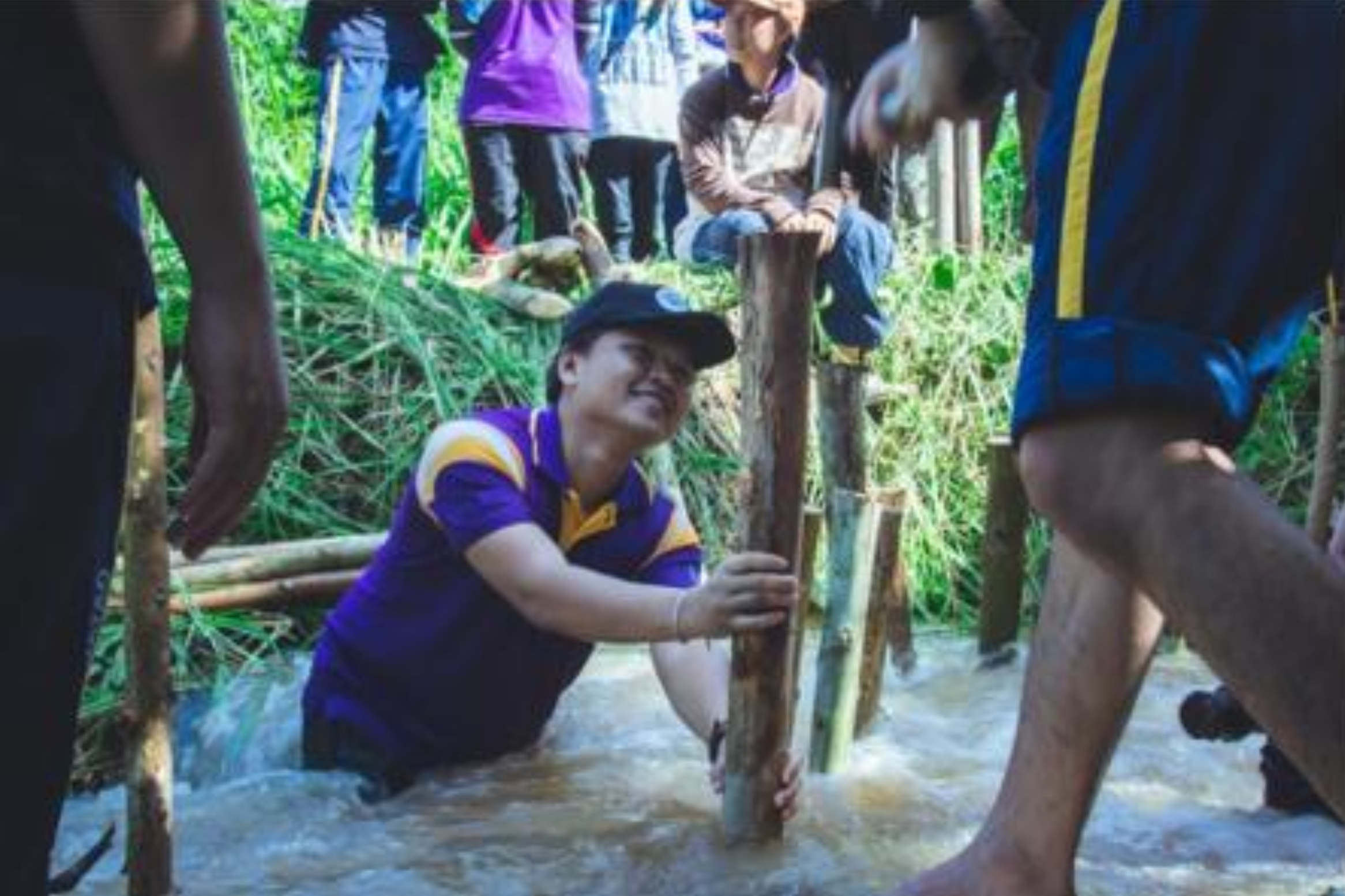
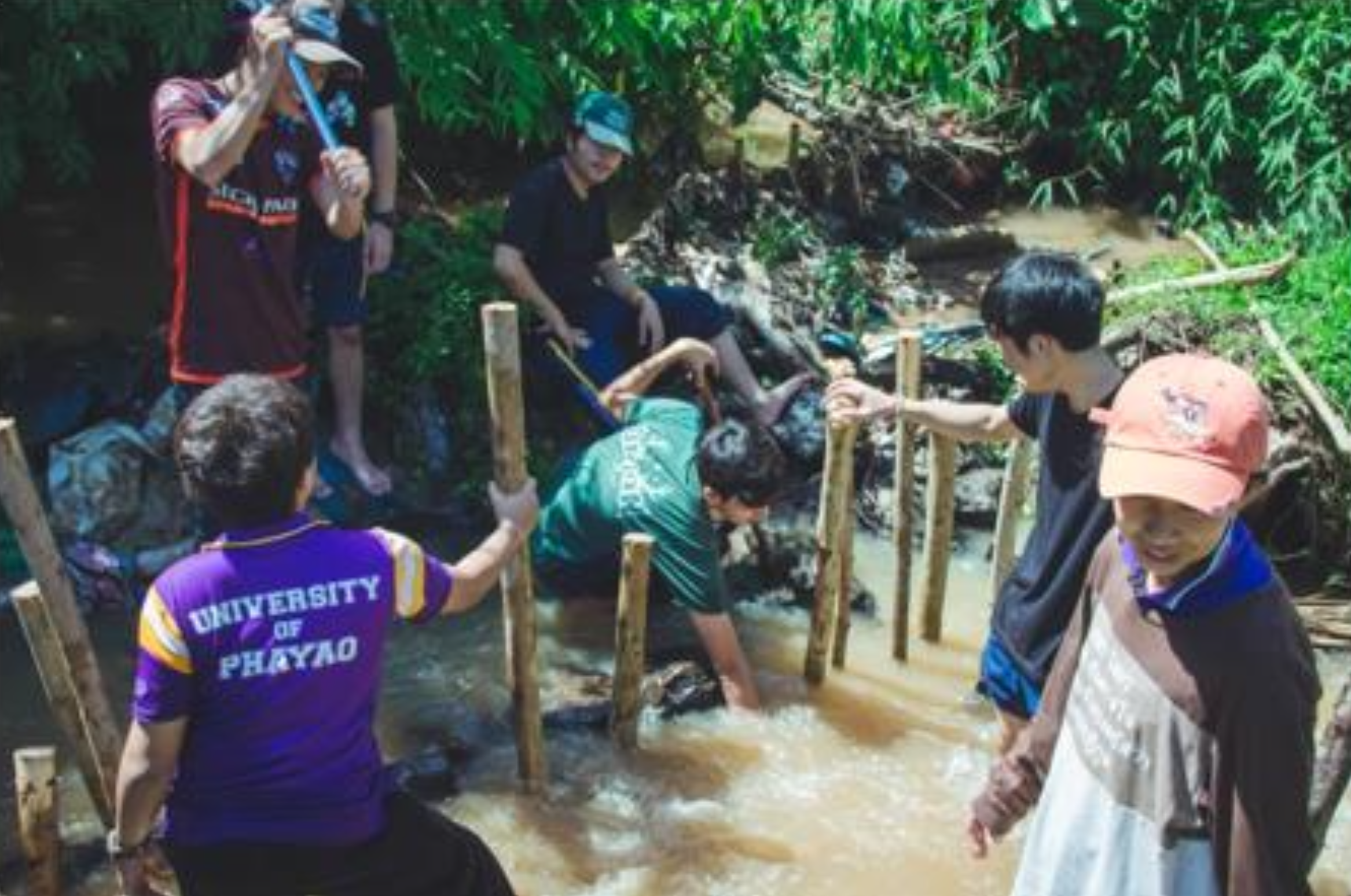
University of Phayao students and community members building a check dam in a stream University of Phayao students and community members constructing check dams for watershed conservation
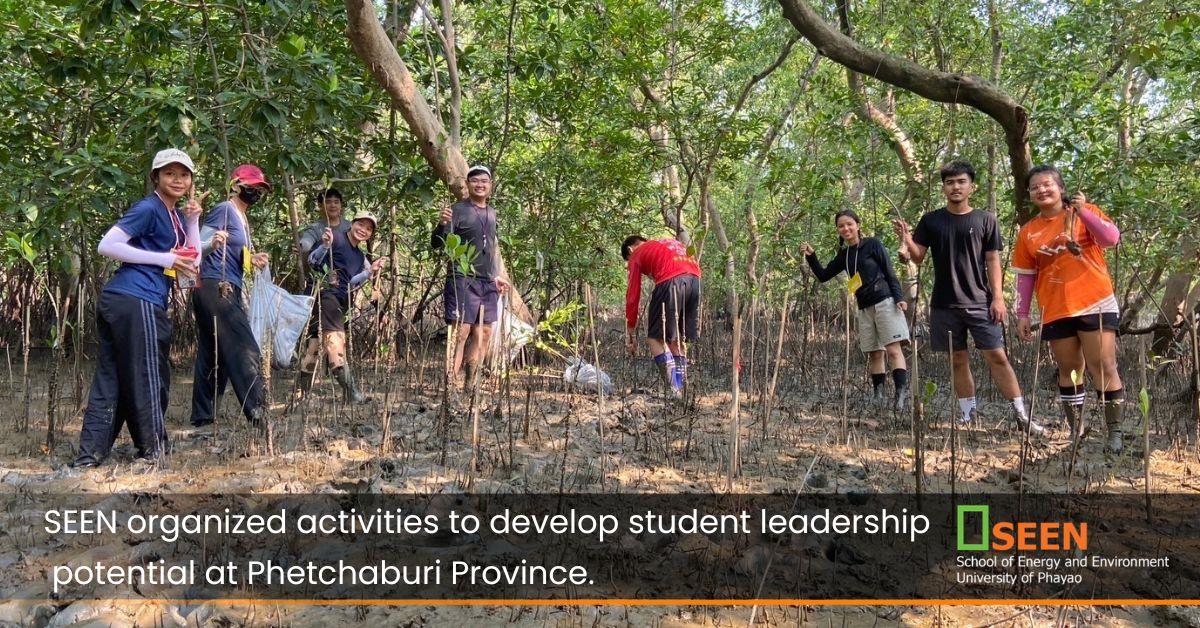
SEEN organized activities to develop student leadership potential at Phetchaburi Province, mangrove planting

Education and Research in the Sustainable Development Goals (SDGs)

The university has undertaken a wide range of education and research programs that contribute significantly to the achievement of the 17 Sustainable Development Goals (SDGs). These initiatives demonstrate a strong institutional commitment to sustainability integration across teaching, learning, innovation, and community engagement. Key programs include:
  • Integration of sustainability themes across the curriculum in various disciplines, including environmental science, engineering, economics, public health, and social sciences.
At the University of Phayao, learning happens both inside and outside the classroom. We have transformed our campus into a living laboratory where students engage with real-world challenges and develop innovative solutions for a more sustainable future. Our initiatives not only focus on environmentally friendly campus operations but also aim to educate and inspire students and staff to become environmentally conscious leaders. By fostering a culture of innovation and sustainability, we prepare our graduates to drive positive change for generations to come.
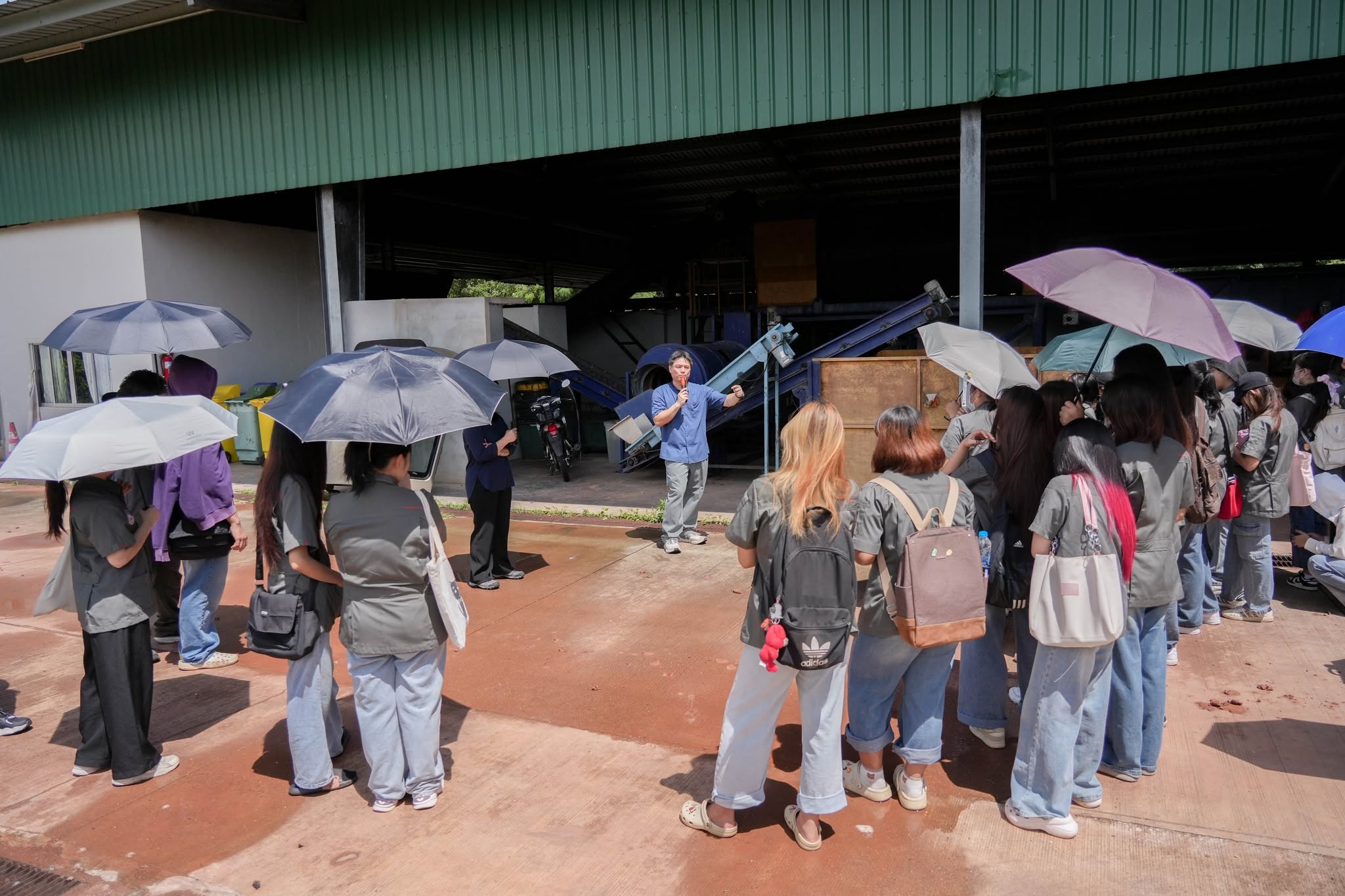
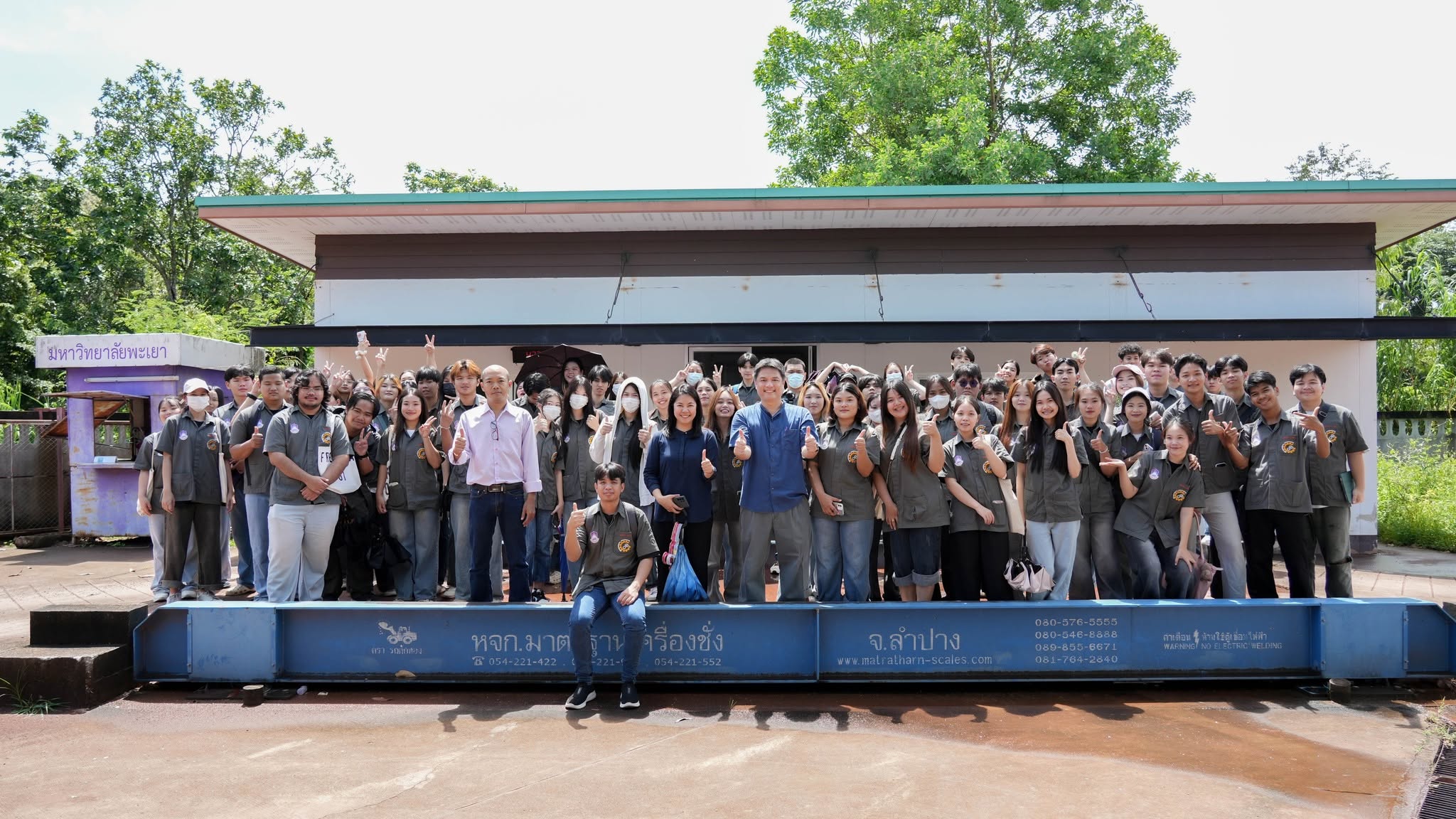
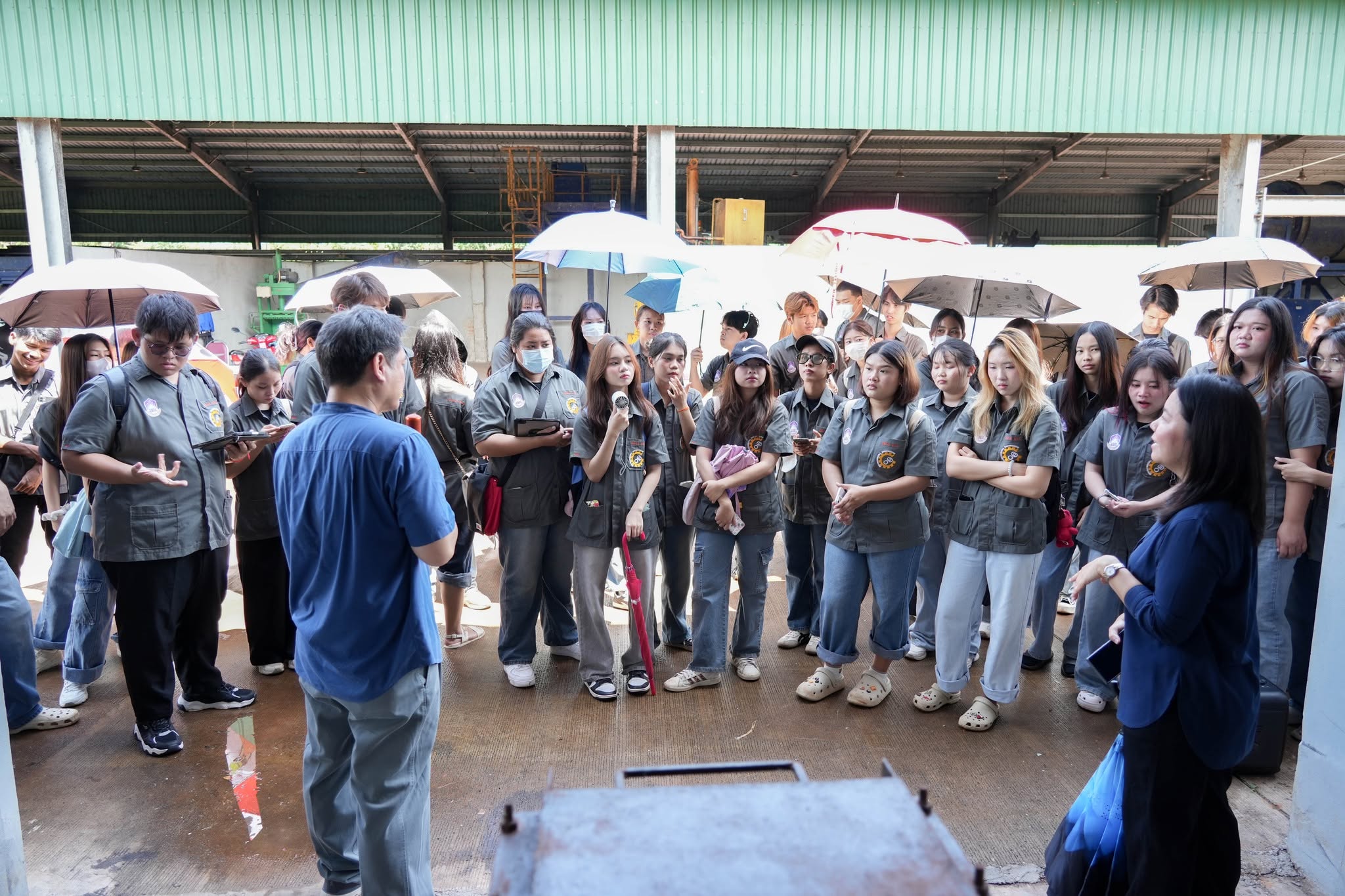
Students gathered outdoors during a waste management course field visit Students with umbrellas during a waste management course field visit Students with umbrellas during a waste management course field visit

Example of a waste management course, which is one of the sustainability courses at the University of Phayao.

  • Development of interdisciplinary programs and courses focused on climate change, energy transition, circular economy, and sustainable development.
University of Phayao is committed to education extends beyond the classroom. Guided by the principle of lifelong learning, we promote self-directed learning through our state-of-the-art e-Learning platform and have created dynamic learning environments across our campus. These include the tranquil Learning Garden, the multi-level Learning Exchange Center (spanning the 1st to 4th floors of its dedicated building), and the globally focused International Learning Space within the Faculty of Liberal Arts. In alignment with our mission to tackle the critical challenges of our time, the University of Phayao places strong emphasis on sustainability education. Our courses and programs equip students and staff with a deep understanding of complex issues such as climate change adaptation and mitigation, energy conservation, renewable energy, waste and water management, and environmentally friendly transportation.
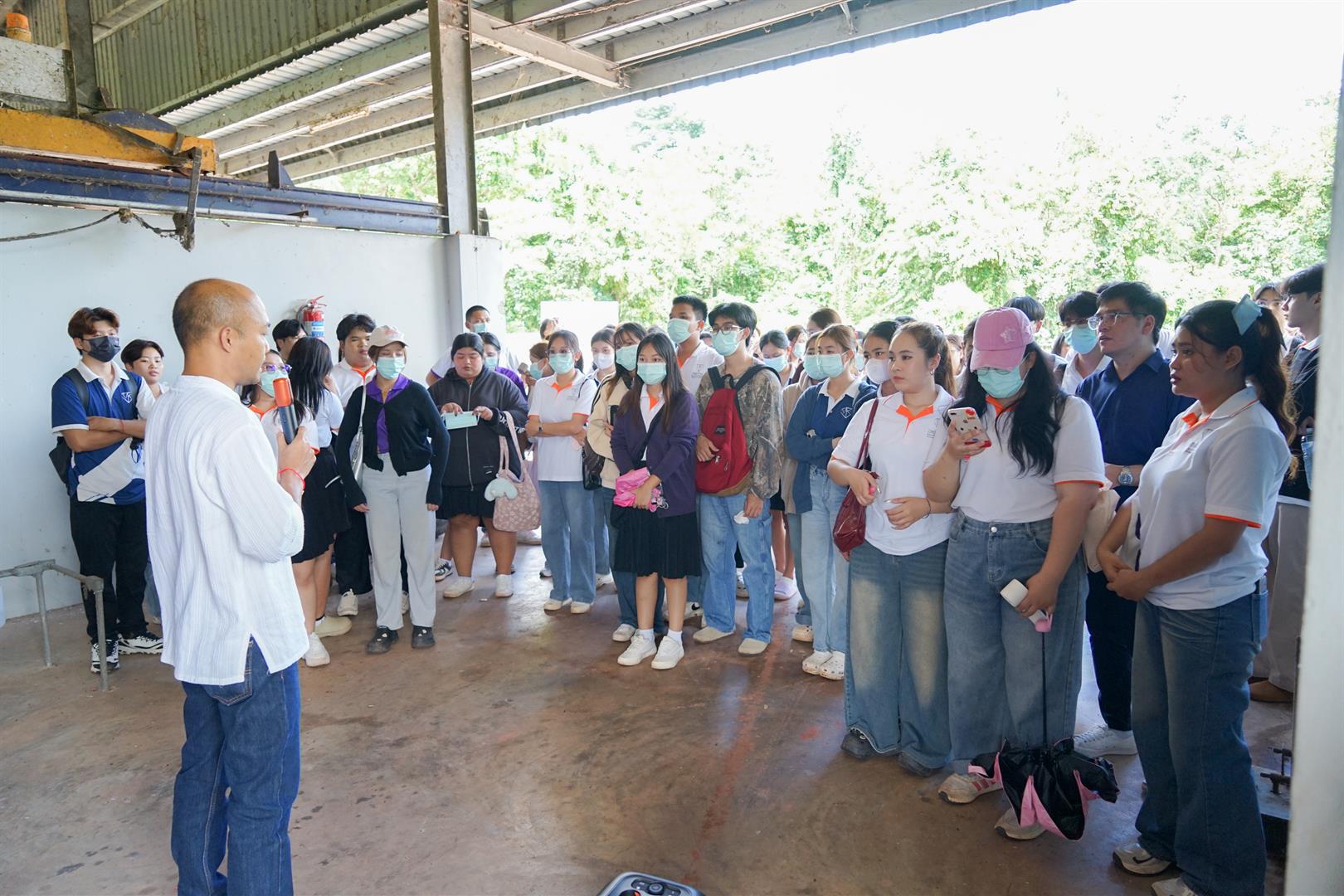
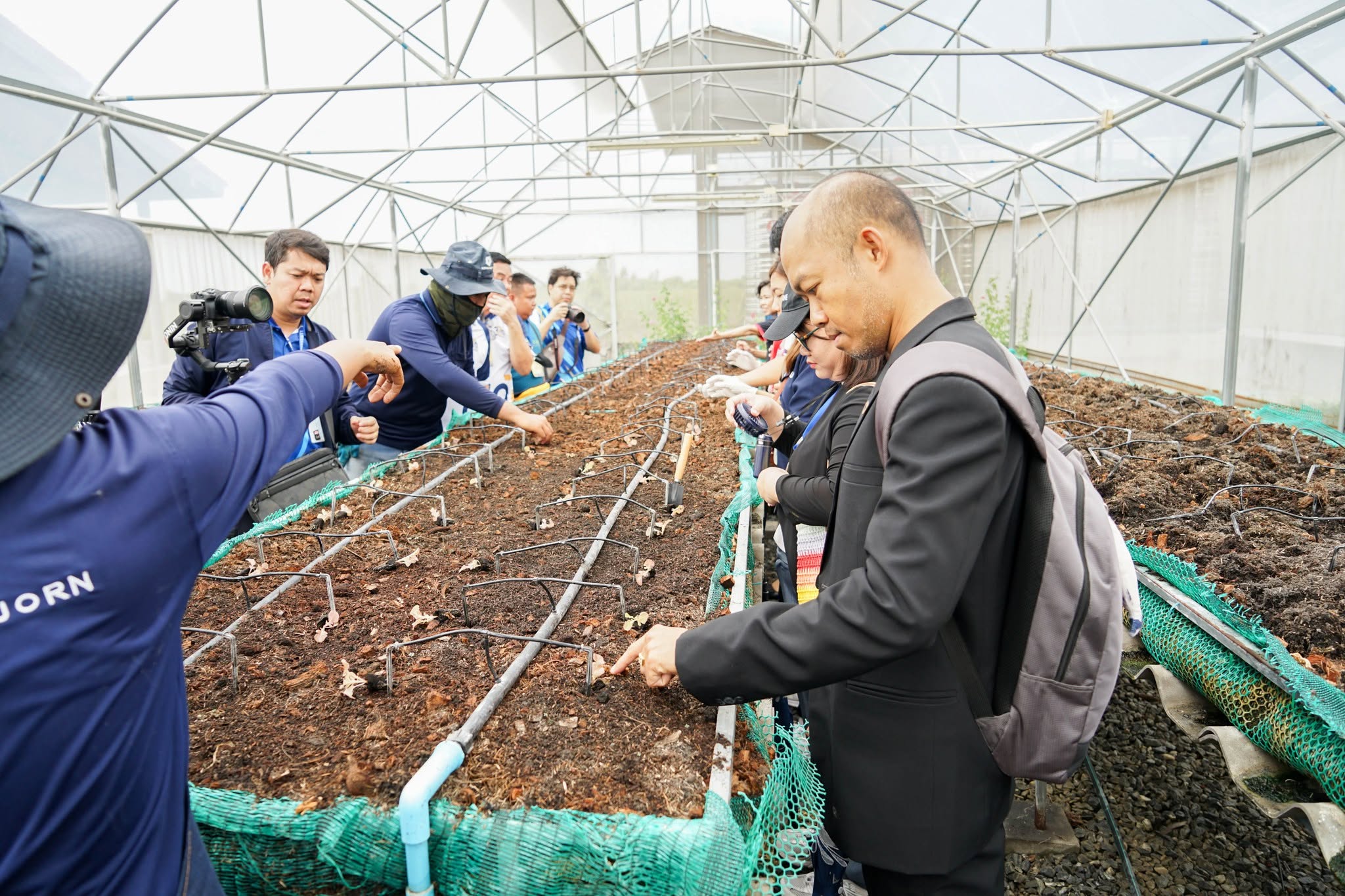
Delegation visiting a composting facility as part of a sustainability study program Students gathered at a facility during a sustainability study program visit

Examples study program related to sustainability offered

  • Establishment of dedicated research centers, labs, and think tanks addressing key sustainability challenges such as renewable energy, biodiversity, water management, and urban resilience.
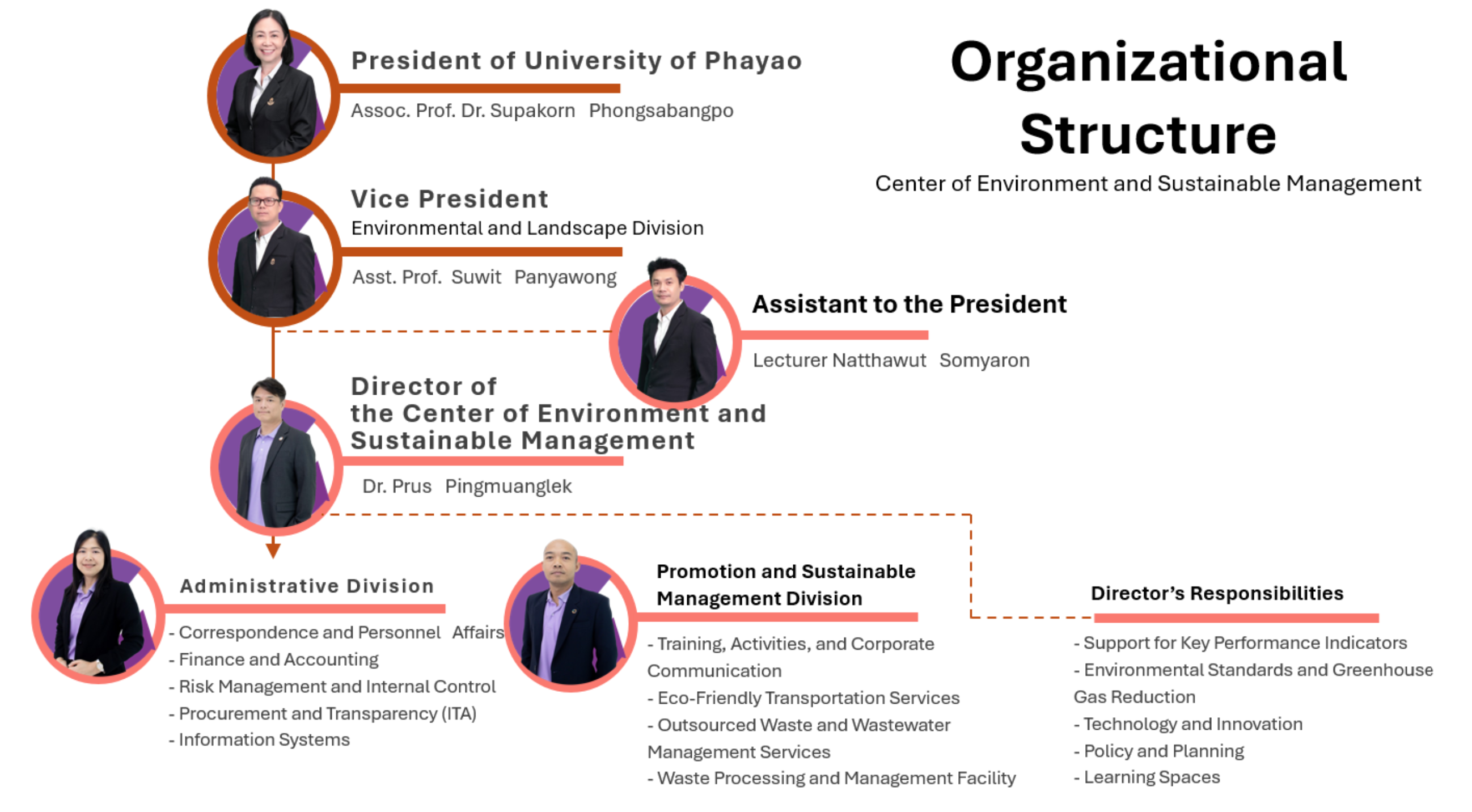
The Center of Environment and Sustainable Management (UP-CESM) has been designated by the University of Phayao as the unit responsible for coordinating sustainability matters within the institution. Its background is as follows: The Center of Environment and Sustainable Management (UP-CESM) was established to support the University of Phayao's strategic goal of becoming a world-class green university. It aims to align the university's operations with global environmental and climate change policies. This initiative seeks to position the university as a leader in greenhouse gas management, striving toward carbon neutrality through knowledge and innovation. It also supports the university's mission to become a world-class green university and to fulfill its vision: "A University Creating Wisdom for Community Innovation, Sustainable Internationalization."
Organizational Structure of the Center of Environment and Sustainable Management, University of Phayao
  • Annual publication of sustainability-related research outputs, including peer-reviewed journals, books, policy briefs, and innovation patents.
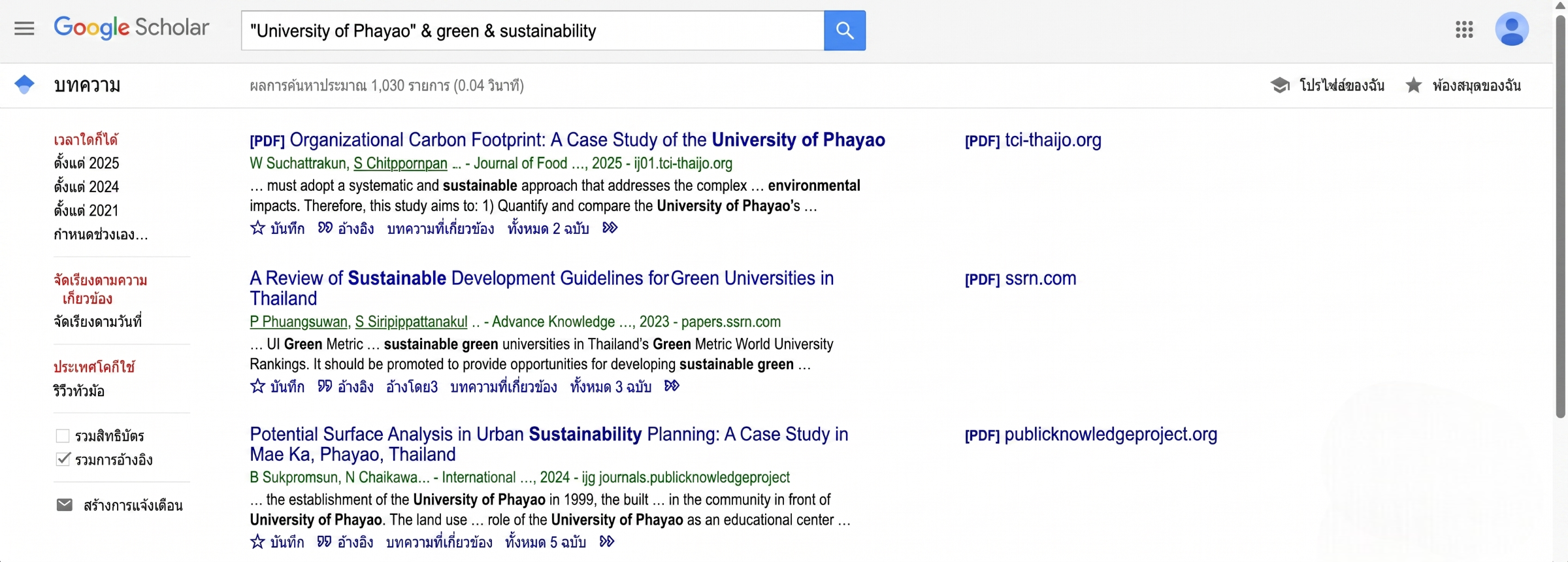
University of Phayao published a total of 2,287 research papers (2021 – 2025). Of these, 1,764 papers—accounting for 77%—focused on sustainability and environmental topics. Specifically, 373 papers addressed environmental issues, 472 papers focused on agriculture and food security, and 919 papers explored sustainability in areas such as energy and engineering.
Google Scholar search results screenshot showing University of Phayao sustainability research publications
  • Provision of sustainability-focused scholarships, thesis grants, and funding support for student-led research and capstone projects.
  • Total research fund in 2024 = 6,017,942.26 US Dollars
  • Total research fund in 2025 = 6,609,671.55 US Dollars
  • Total research fund in 2026 = 6,503,397.68 US Dollars
  • The averaged annum last 3 years of research fund = 6,377,003.83 US Dollars
More over research funding in the Annual report 2023-24: http://dra.up.ac.th/updra/ Community-based learning and participatory action research in collaboration with local governments, industries, and NGOs to solve real-world environmental issues.
Project name Participants Project duration Project area
hosted faculty members and sixth-year pharmacy students from the University of Utah, United States, under the Global Health Pharmacy Clerkship.452 dayED
Natural Dyes: Research That Transforms Fabrics into Income and Builds Sustainable Communities.683 dayWS
UP Promotes Healthy Aging through Personalized Nutrition Services in Mae Sai Subdistrict.1202 dayED
SEEN-UP, on-site training workshop in technology and innovation @ Community Enterprise "The Yian River Basin".301 dayWS
From Wisdom to Creative Energy: School of Political and Social Sciences Partners with Community to Support Elderly Music Band under.1651 dayED
Allied Health Volunteer Community Development Project, Activity 1: 'Coloring Dreams, Sharing Kindness' for the Academic Year of 2025" at Ban He School.1185 dayED
Engineering UP Enhances the Efficiency of Community Liquor Distillation Systems through Sustainable Engineering Technologies.152 dayEC
Engineering Donates Equipment to Support Development of Ban Mae Om Lan School, Mae Hong Son Province.944 dayED
UP Researchers Develop "Healthy Colored-Rice Kalamae" Empowering Local Communities through Science.101 dayED
School of Education and Student Association supported teacher student development at Ban Mae Mae School, Chiang Mai.2573 dayED
"Samrit Suk Center" Project, University of Phayao.822 dayED
BCA Student Council Promotes the Spirit of Giving through "Give To Grow" Initiative, Creating Positive Social Impact.262 dayED
Science Beyond the Classroom, School of Science, and Partners Join Hands for Mae Na Ruea Community.1363 dayED
School of Allied Health Sciences, "Physical Therapy Community Engagement Project".955 dayED
Political Science Students Drive Local Innovation through "Next-Gen Phayao" Platform.2181 dayED
UP Integrates Yao Wisdom! Teaching "Herbal Compress with Jian Hob and Riceberry" to Border Patrol Police School Students to Foster Community Income.252 dayWS
School of Science Presents Progress on Carbon Reduction Research to Reinventing University Committee.933 dayEC
Faculty of Science, University of Phayao Undergoes Research Project Evaluation Under "1 Faculty 1 SDG" Initiative.15210 monthWS
School of Education conducted the Developing a Collaborative Research Center for Excellence in Education and Learning in Highland Communities activity.843 dayED
School of Education promoted community and local wisdom products to support the BCG economy.1502 dayED
UP Integrates Yao Wisdom! Teaching "Herbal Compress with Jian Hob and Riceberry" to Border Patrol Police School Students to Foster Community Income.425 dayWS
School of Liberal Arts, University of Phayao, Wins Gold Award at "Learning Space for SDGs 2025".6505 monthED
UP Launches "UP Volunteer: Power of Learning" to Support Educational Opportunities in Remote Schools.2242 dayEC
School of Allied Health Sciences, University of Phayao, Organized a Workshop on Building Resilience for Elderly Caregivers.661 weekED
University of Phayao Physiotherapy Students Engage with Community to Improve Local Health Phase 1-3: Applying Physiotherapy Knowledge.832 monthED
UP Extends Aid to Staff and Students Affected by Floods in Phayao and Nan Provinces.4501 weekSI
School of Science, UP Fosters Entrepreneurial Skills, Preparing Students for the "1st Community Innovation and Science Market".1 community (850)10 monthEC
School of Education set up a learning exhibition board and provided teaching materials at the Bettydumen Border Patrol Police School, Phayao.1304 dayED
UP Supports Tak Bai's Progress Toward Becoming a "Tak Bai Learning City".562 daySI
UP Promotes Ban Hmong Mai Community Enterprise as a Cultural Tourism and Learning Hub for Hmong Heritage.751 weekSI
Physical Therapy Team from AHS UP visited Maeka vicinity at Muang County, Phayao. (AHS News)351 weekSI
The Department of Community Health, School of Public Health provided school health education to improve community quality of life.452 days per yearED
  • Organization of conferences, workshops, and summer schools on SDG-related themes to foster knowledge exchange and interdisciplinary dialogue.
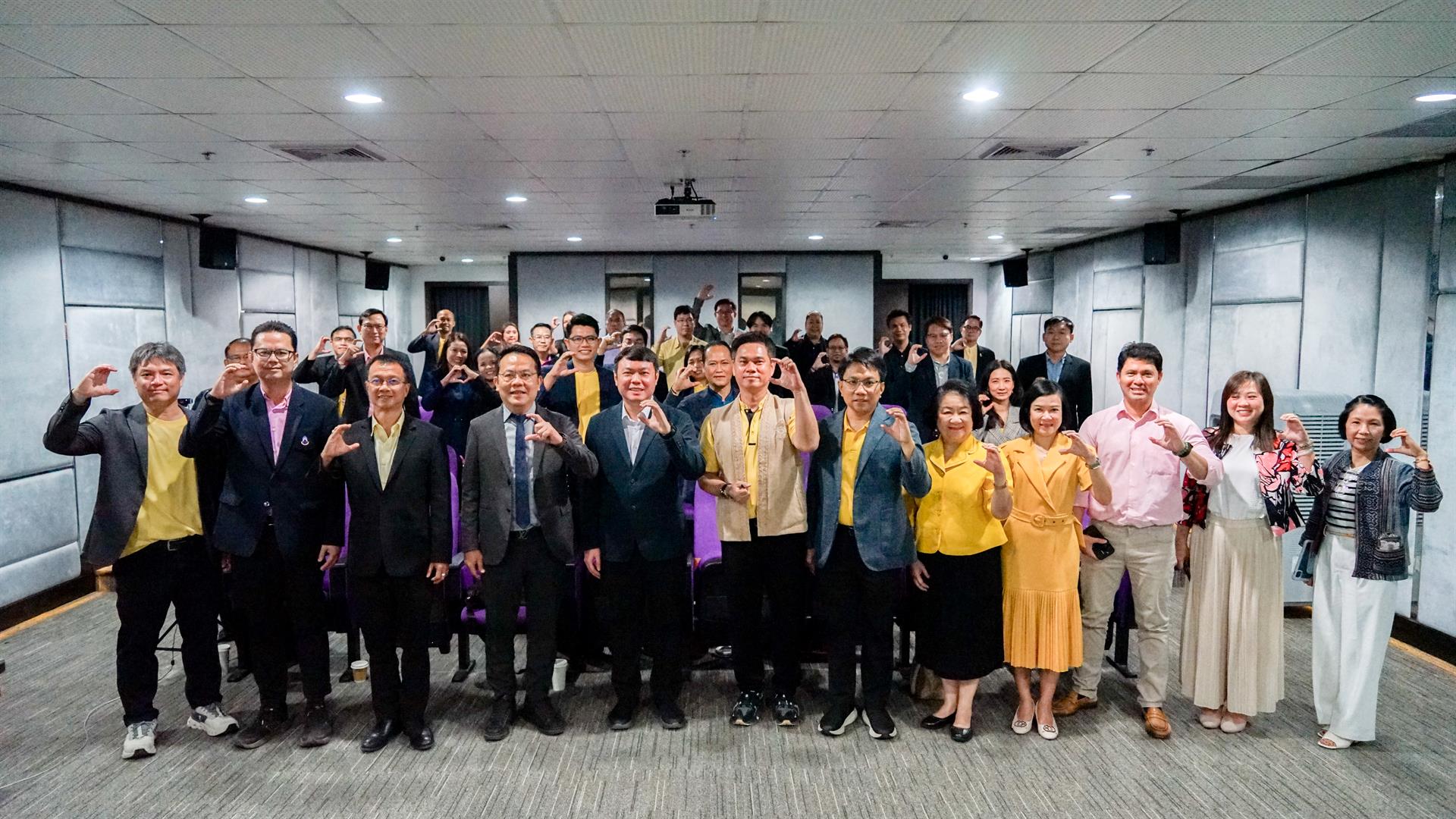
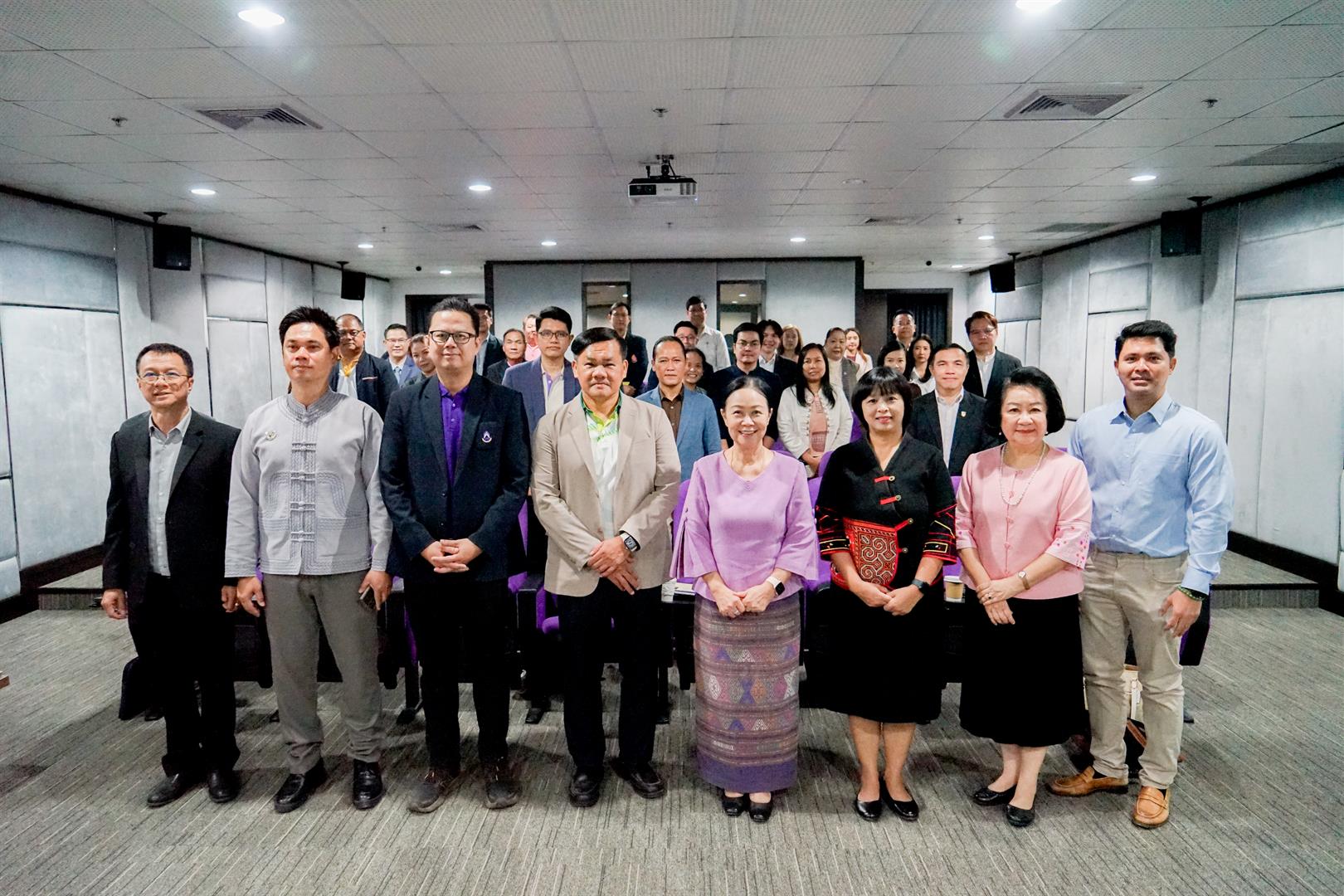
UP Carbon Neutrality training for executives. University of Phayao prioritizes personnel development at all levels. This strategy aims to establish a modern, efficient, transparent, and ethical management system based on good governance. Its objectives are to enhance both performance and professional growth. The training program consists of four modules: Module 1: Carbon Neutral University, Direction and policy on greenhouse gas and global warming management in Thailand. The training featured Mr. Thada Varunchotikun, Manager of the Low Carbon Business Certification Office, Thailand Greenhouse Gas Management Organization (Public Organization), as the keynote speaker. Module 2: Net zero & Carbon Neutral. This session was part of Module 2: Net Zero & Carbon Neutral and Organizational Planning Strategies, under the UP Carbon Neutrality Executive Training Program, organized by the Center of Environment and Sustainable Management, in collaboration with the School of Energy and Environment. A lecture was delivered by Associate Professor Dr. Suchat Luangprasert, President of the Environmental Engineering Association of Thailand, at the Screening Room of the Institute for Learning Innovation, University of Phayao.
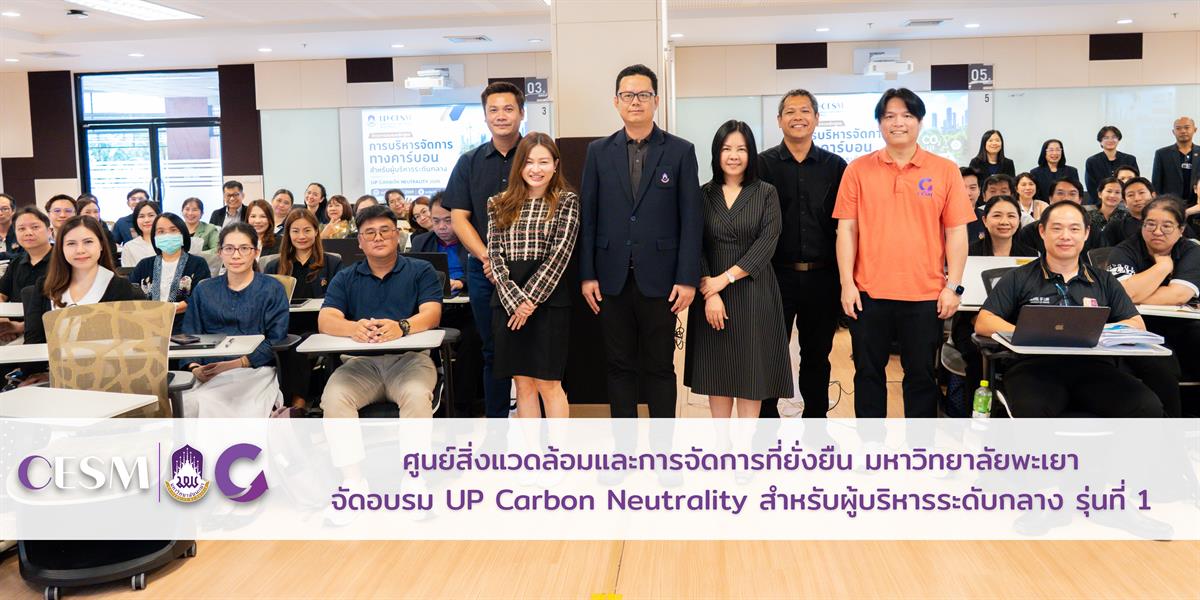
Group photo of participants at the UP Carbon Neutrality executive training program Group photo of executives and staff at the UP Carbon Neutrality training session
Module 3: Carbon Footprint Assessment - Carbon Footprint for Organization Assessment (CFO), Thailand Voluntary Emission Reduction Program (T-VER) Assessment and Certification, Carbon Offsets for Carbon Neutrality. The lecture was delivered by distinguished faculty members from the School of Energy and Environment, University of Phayao, and held at the Screening Room, Institute for Learning Innovation, University of Phayao.
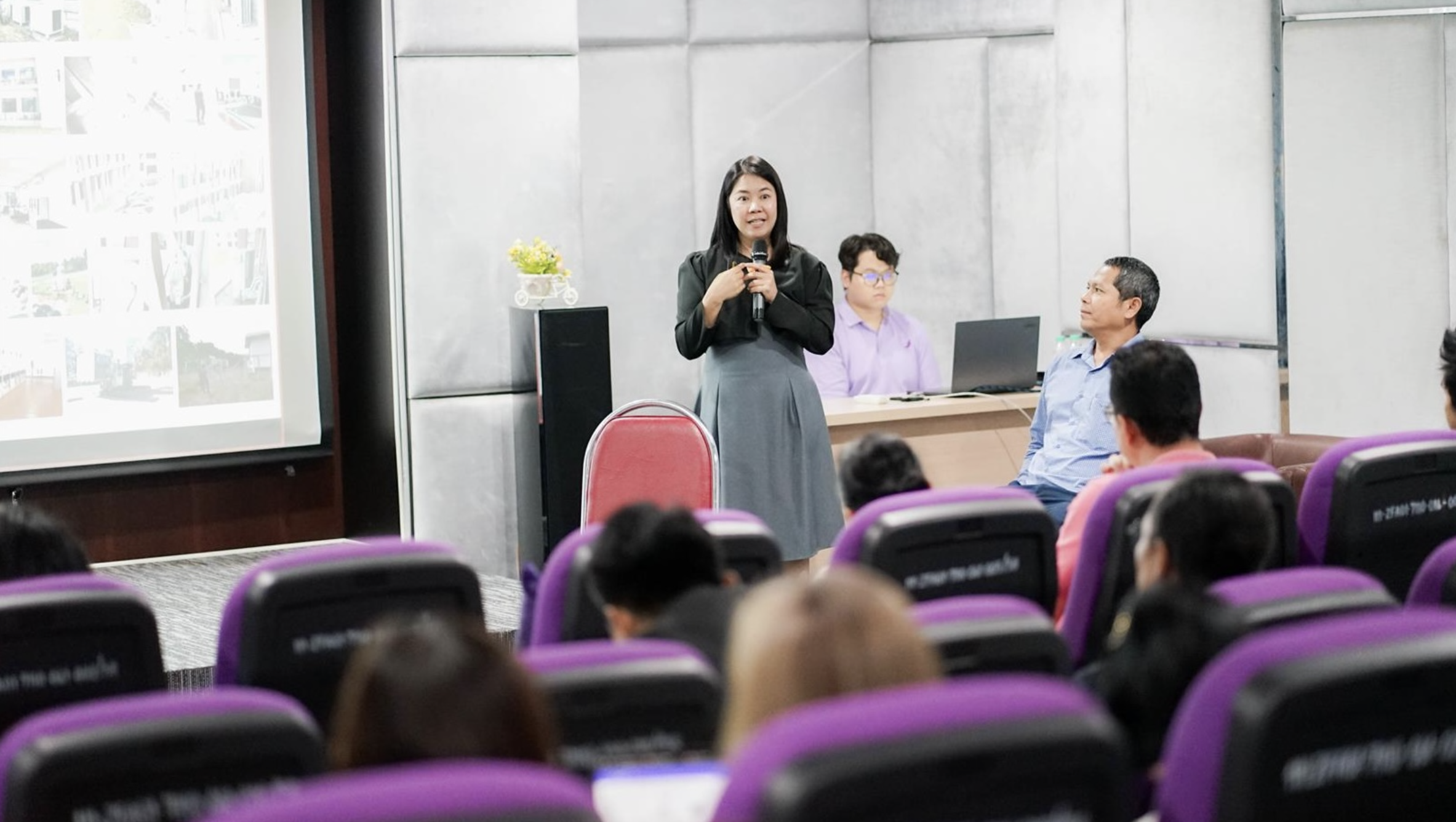
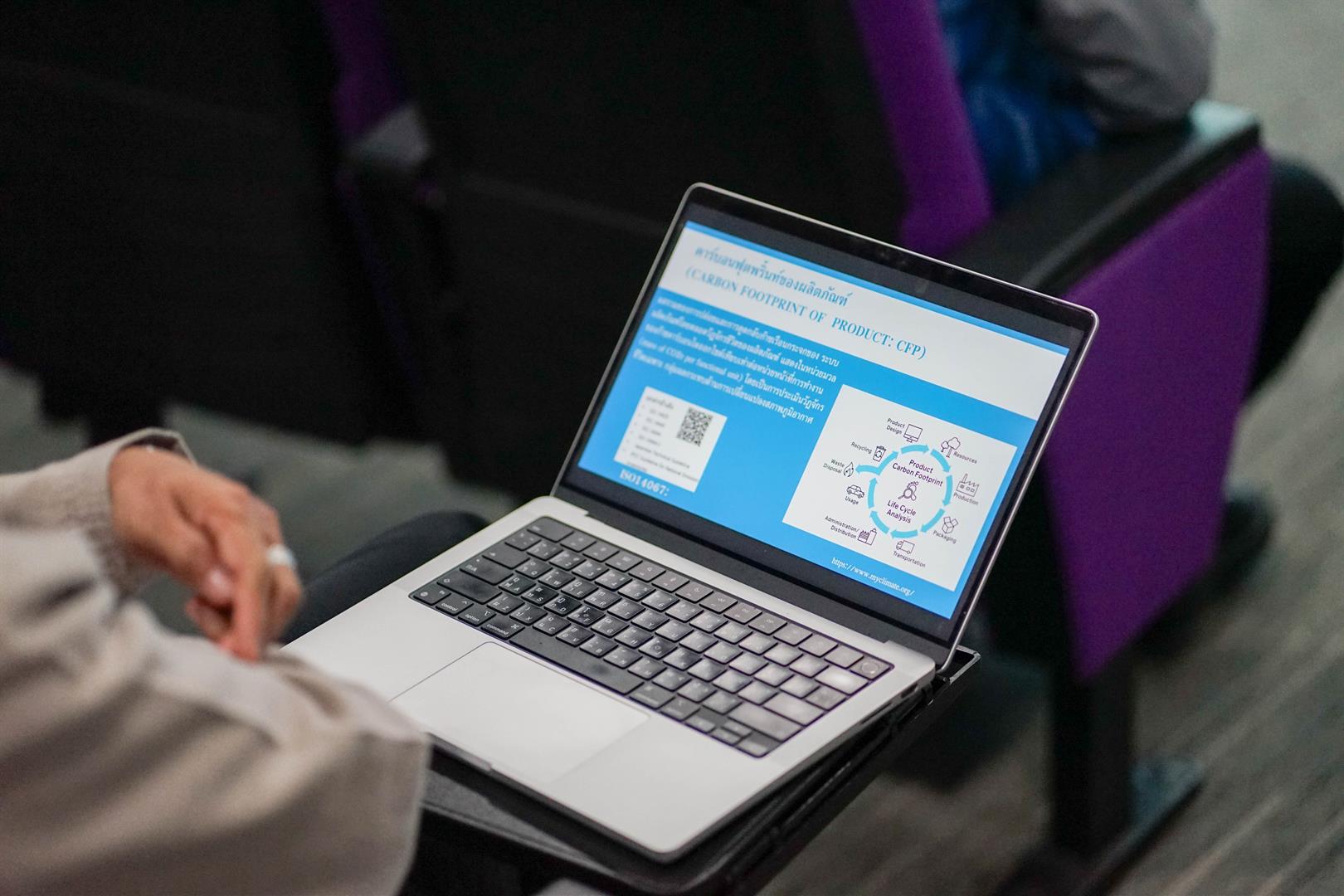
Speaker delivering a lecture during the Carbon Footprint Assessment training module Laptop displaying training materials during the Carbon Footprint Assessment session
The training program covered key topics including the concepts of Net Zero, Carbon Neutrality, and Carbon Credits; organizational carbon reduction target setting; and strategic planning approaches toward achieving Net Zero emissions. Participants also received guidance on applying for Organizational Carbon Footprint (CFO) assessment and certification. The sessions were delivered by Assistant Professor Dr. Netiya Krithachart and Dr. Surat Setpho.
Group photo of participants at the UP Carbon Neutrality training for middle-level executives, Batch 1
The University of Phayao remains committed to achieving carbon neutrality and reducing greenhouse gas emissions in alignment with Thailand's national strategy on environmentally friendly growth. To support this commitment, the University has incorporated key policies and performance indicators into its University Development Strategic Plan for Fiscal Years 2026–2030. These initiatives are designed to drive the University toward becoming a carbon-neutral institution by 2050 and to promote long-term environmental sustainability.
  • Implementation of environmental literacy campaigns to raise awareness among students, staff, and the broader community.
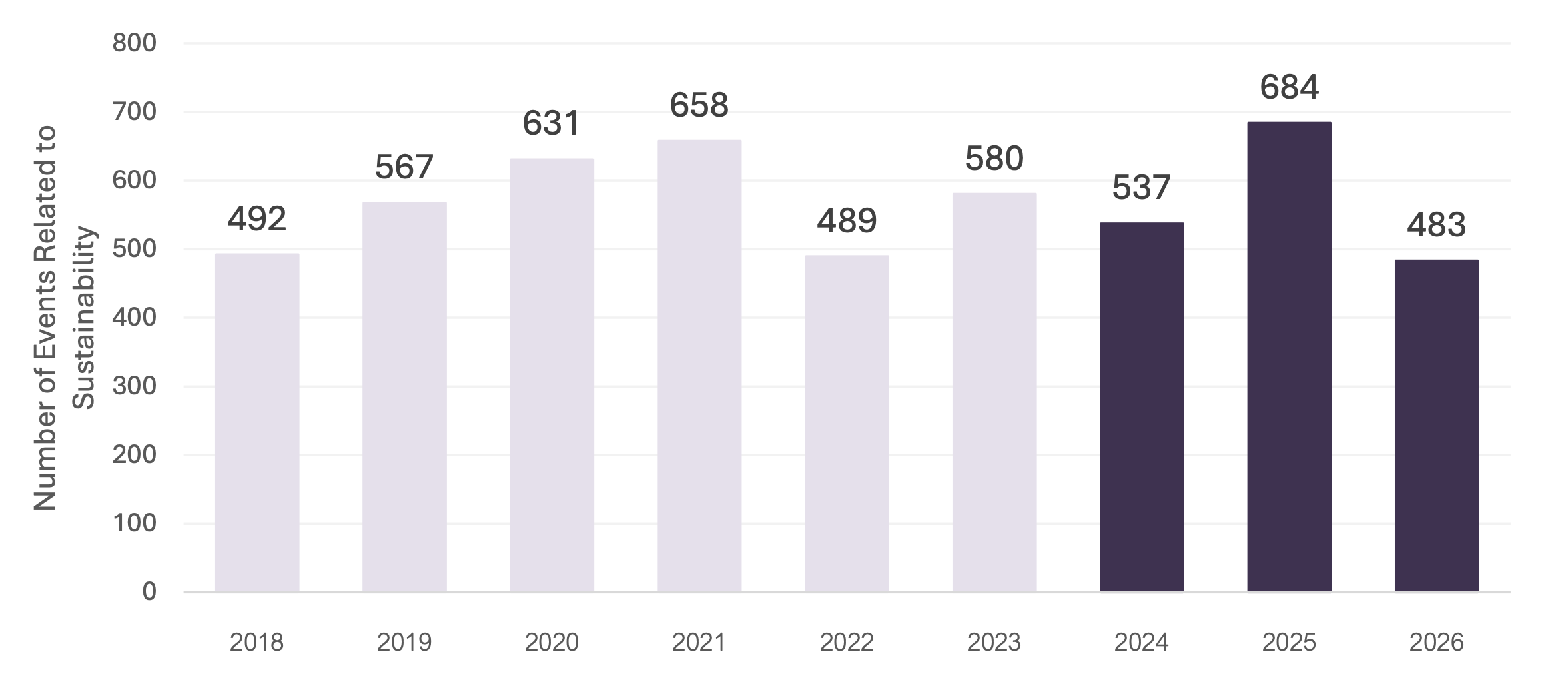
Events related to environment and sustainability hosted or organized by the University of Phayao in the academic year 2018-2026. Total number of sustainability/environment related events in:
Bar chart of the number of events related to sustainability from 2018 to 2026
A total average per annum over the last 3 years (2024-2026) of 568 events (e.g. conferences, workshops, awareness raising, practical training, etc.).
Volunteers building a stream check dam as part of environmental literacy activities Volunteers carrying stones to construct a check dam Volunteers carrying stones to construct a check dam
  • Promotion of green campus living labs, where students and researchers co-develop and pilot sustainability innovations on campus.
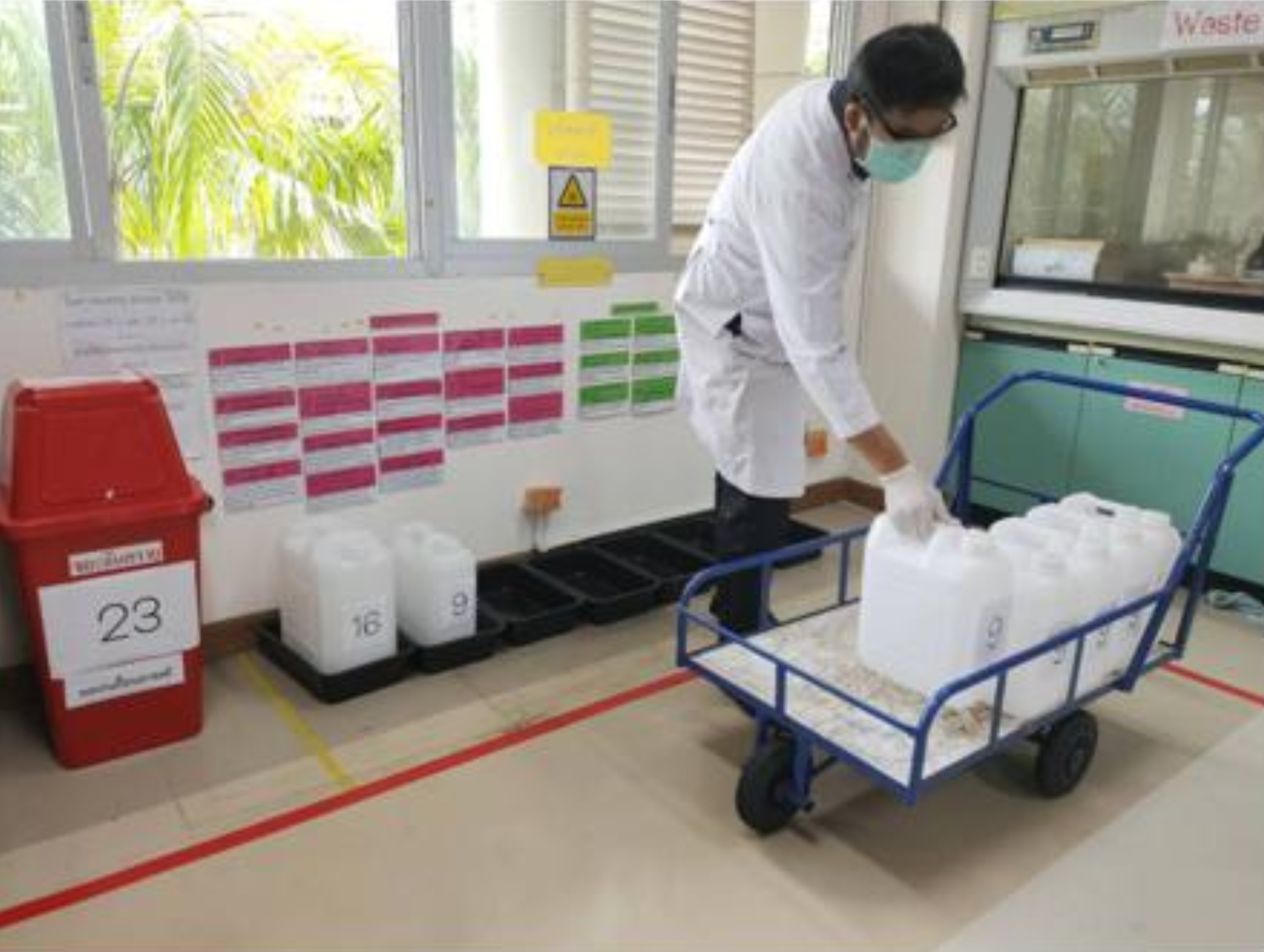
The main concept of system is chemical substance collection (Ignitability, Corrosivity, Reactivity and Toxicity), storage and disposal of waste. In recent year, system is continue improving and developing under the standard of Enhancement of Safety Practice of Research Laboratory in Thailand (ESPReL). This system is consists of three steps, including of waste segregation, waste storage and collection and waste treatment. To ensure that hazardous waste is handled in a good manner that protects human health and the environment, hazardous waste container have been provided to all laboratories according to laboratory request form which is one category in Hazardous waste segregation manual.
Laboratory staff sorting hazardous chemical waste containers Laboratory staff collecting hazardous waste containers on a cart Laboratory staff collecting hazardous waste containers on a cart
  • Partnerships with international academic networks to scale up research collaborations and share best practices on education for sustainable development.
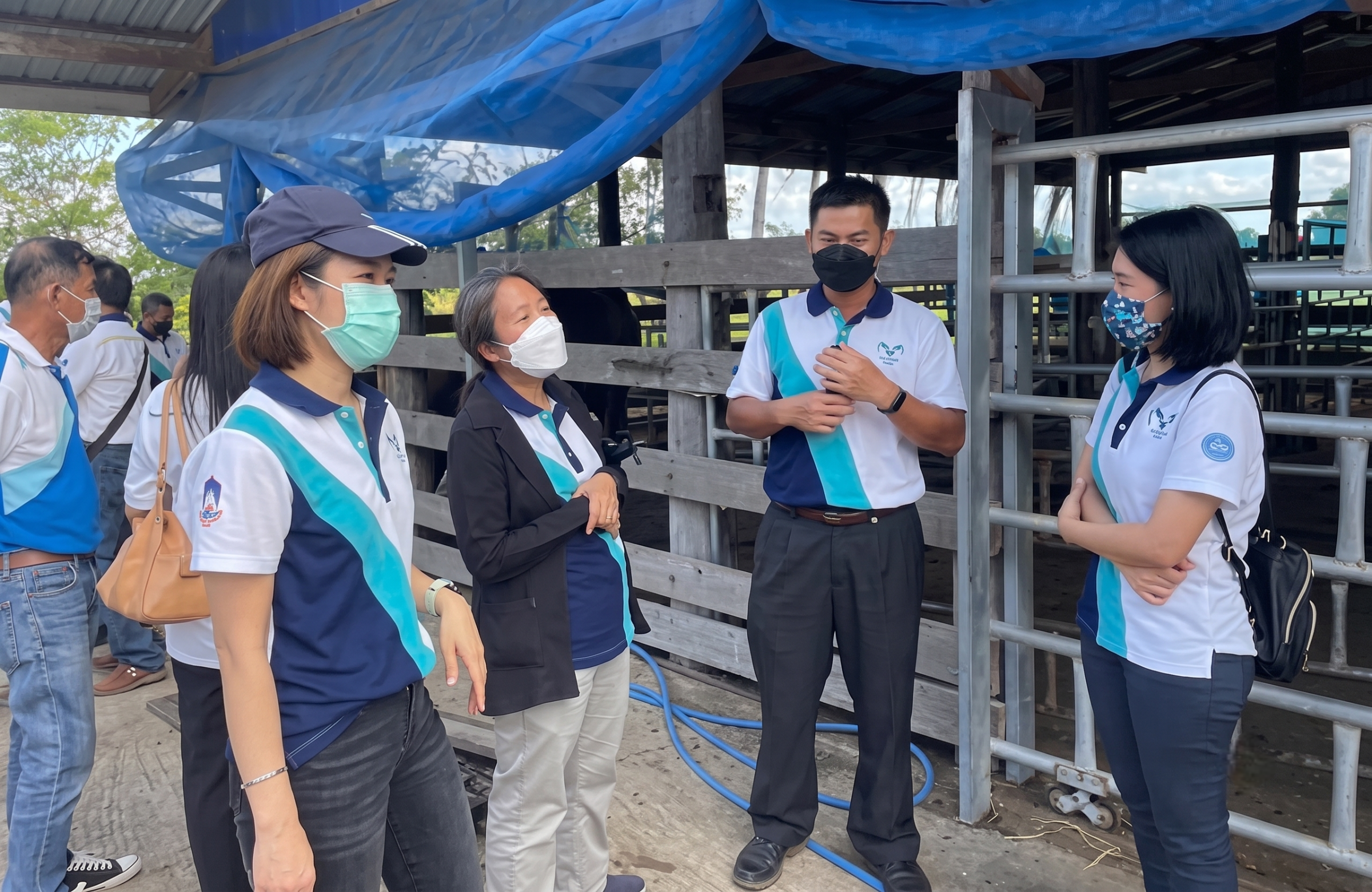
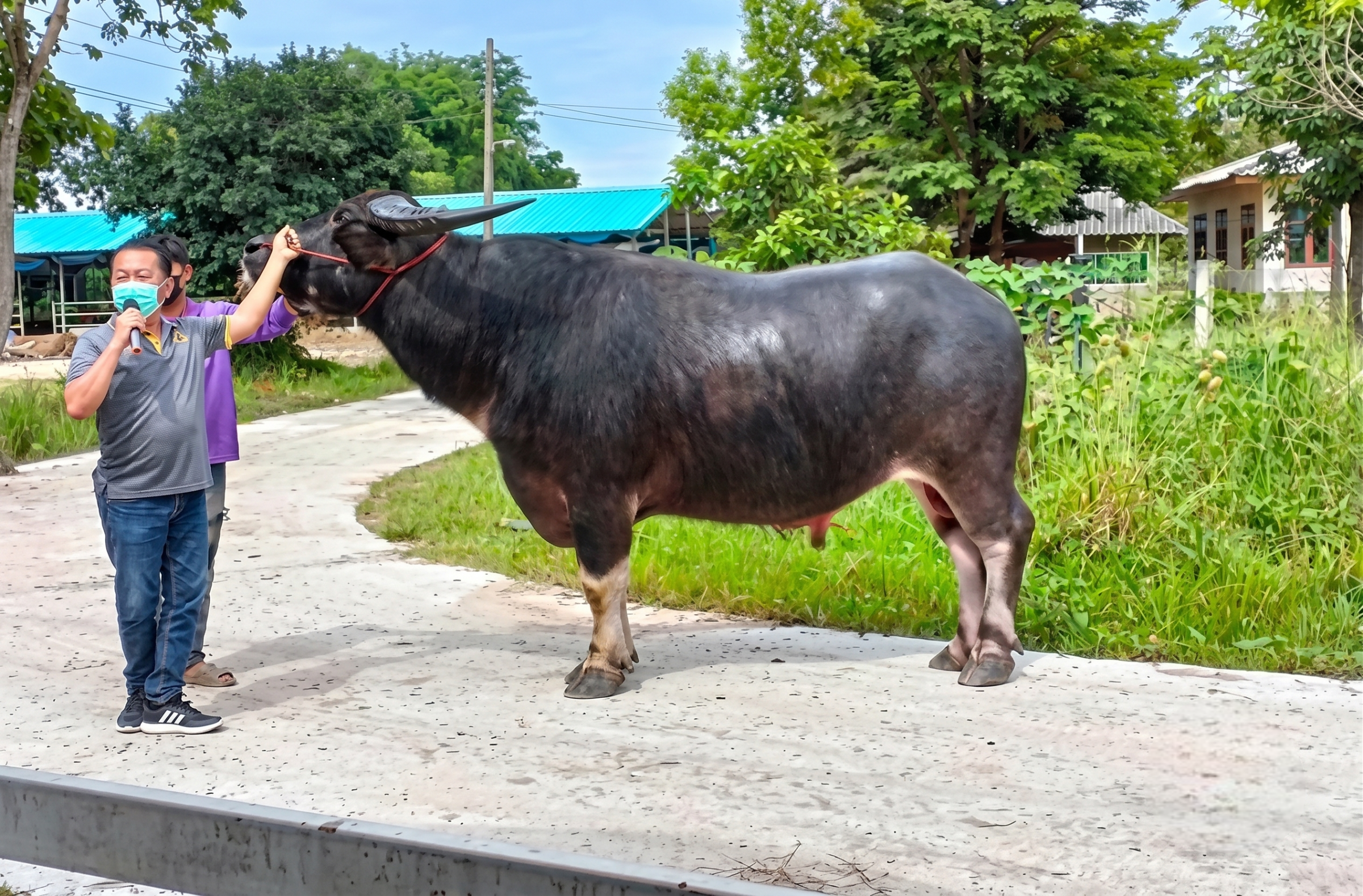
The research project on the development of an innovative community network for high quality buffalo production for domestic and international trade aims to create an innovative community network, establishes model learning areas and community innovators capable of solving and managing their buffalo farming careers in the Phayao and Chiang Rai provinces. This project aims to enhance buffalo production for trade in local and international markets based on local resources and improve the income, well-being, and quality of life of the innovation community network sustainably. This project aims to promote value chain and area transformation through the efforts of community innovators.
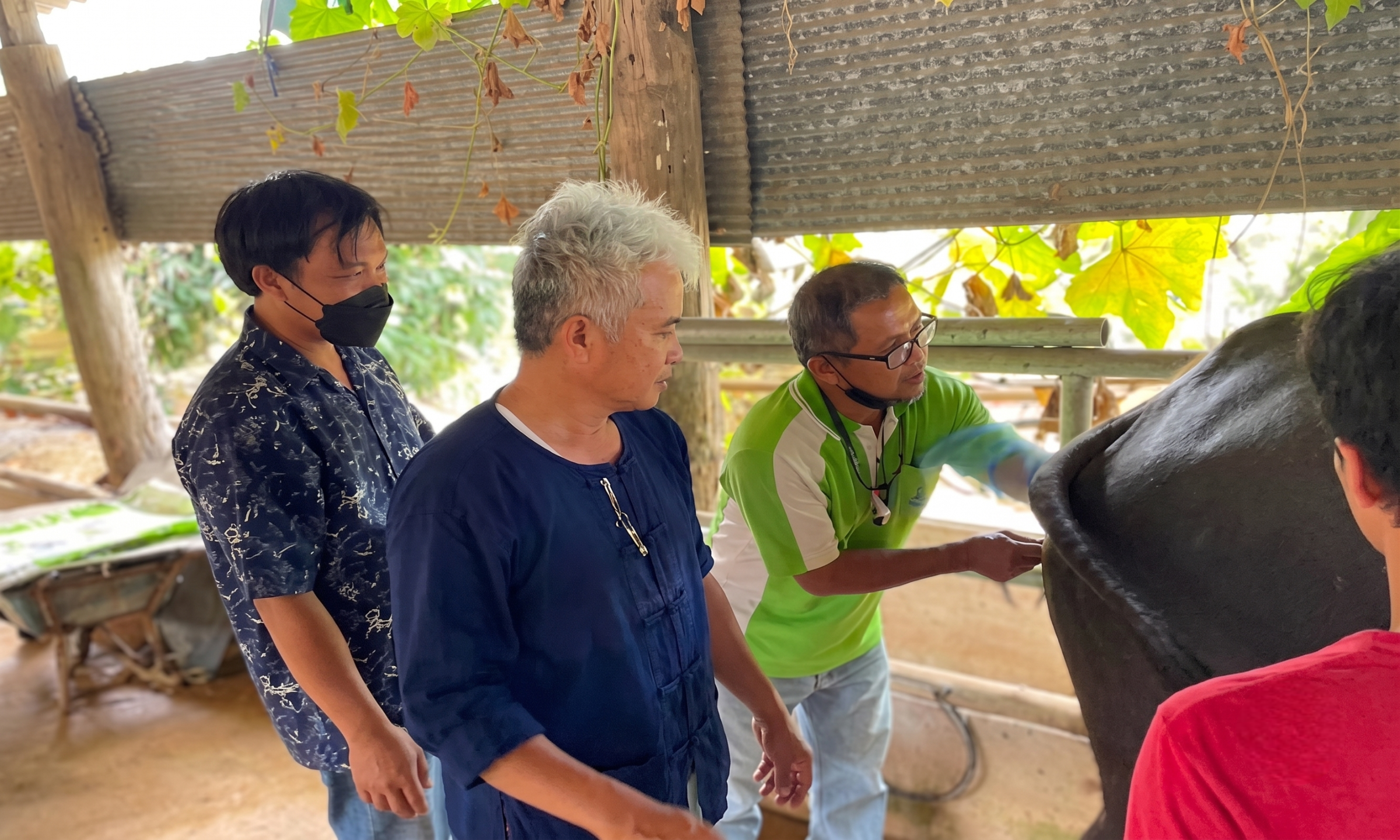
Researchers and community members visiting a buffalo farm as part of the community network project A high-quality buffalo raised through the innovative community network project
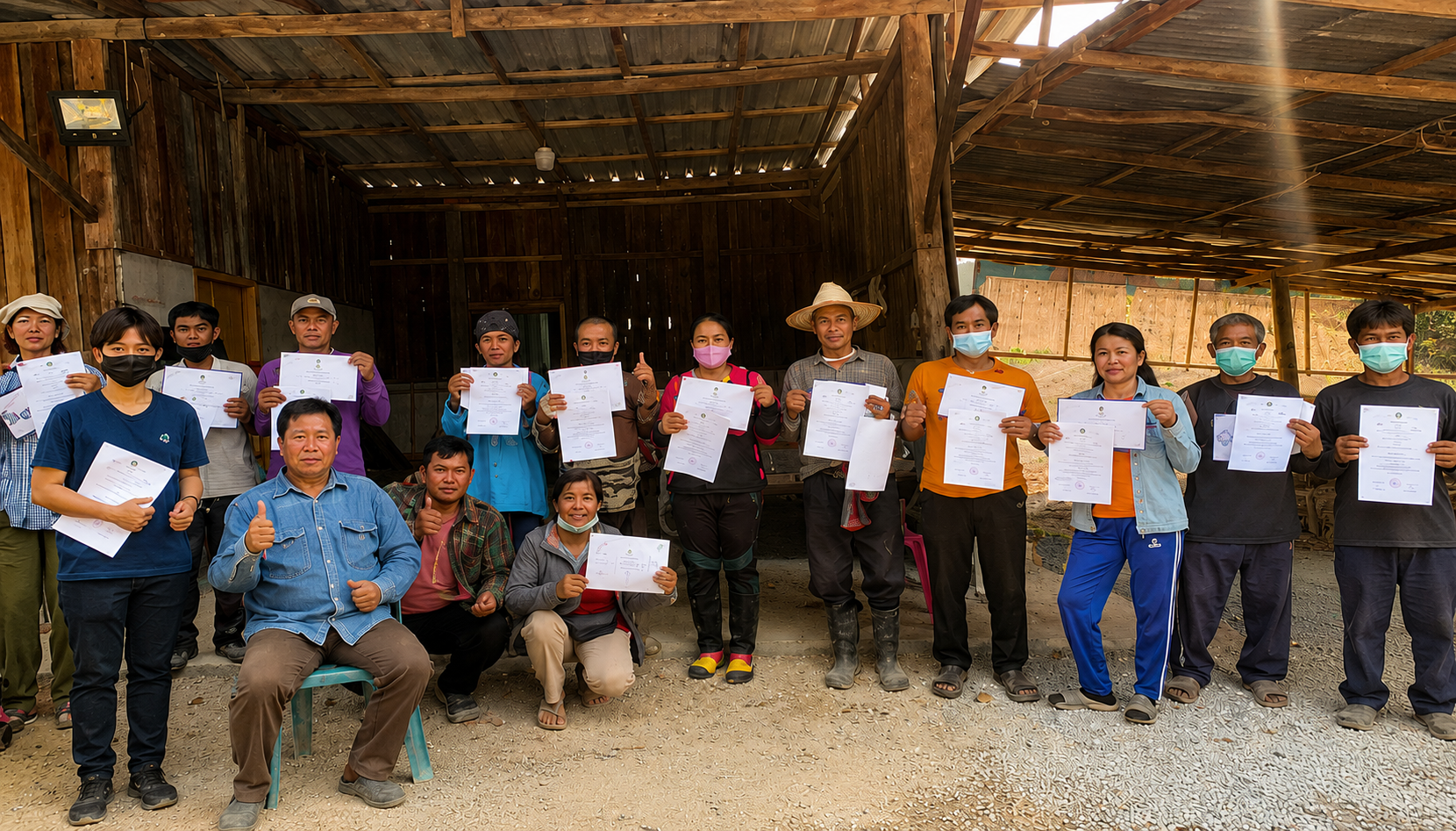
In terms of breeding, the use of estrus induction technology, artificial insemination technology, and online pedigree application has resulted in the production of high-quality buffalo calves. This has helped to reduce the issue of inbreeding and has also expanded the distribution channels for buffalo, with meat buffalo being sold at 30,000 - 50,000 baht per head and breeding buffalo at 50,000 - 100,000 baht per head. In terms of food management, innovative methods have been implemented to grow high-quality animal feed plants, ensuring that buffaloes receive sufficient protein and nutrition for their bodies' needs. The use of agricultural waste as food has also helped to reduce food costs.
Community members holding certificates from the buffalo farming training program Community members holding certificates from the buffalo farming training program
The Faculty of Science at the University of Phayao welcomed a distinguished expert committee to monitor and evaluate the research project "Restoration and Conservation of Forest Ecosystems at the University of Phayao Border Area, Conservation Forest, and Ban So Community Forest to Promote Sustainable Development" under the "1 Faculty 1 Sustainable Development Goal (SDG)" initiative for fiscal year 2025. The evaluation took place at Wat Ban So, Moo 2, Mae Na Ruea Sub-district, Mueang District, Phayao Province.
Faculty of Science expert committee evaluating the forest ecosystem restoration research project
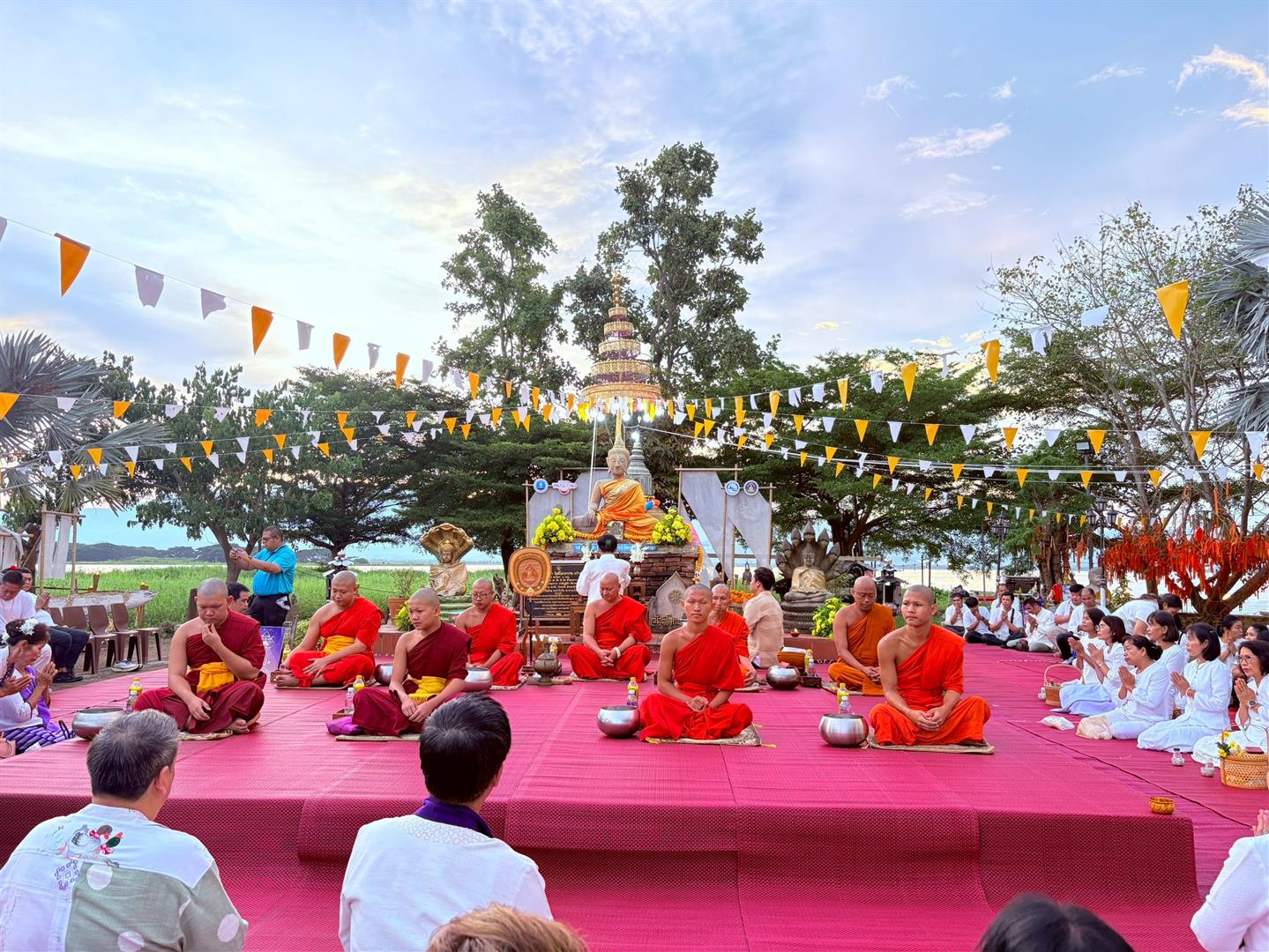
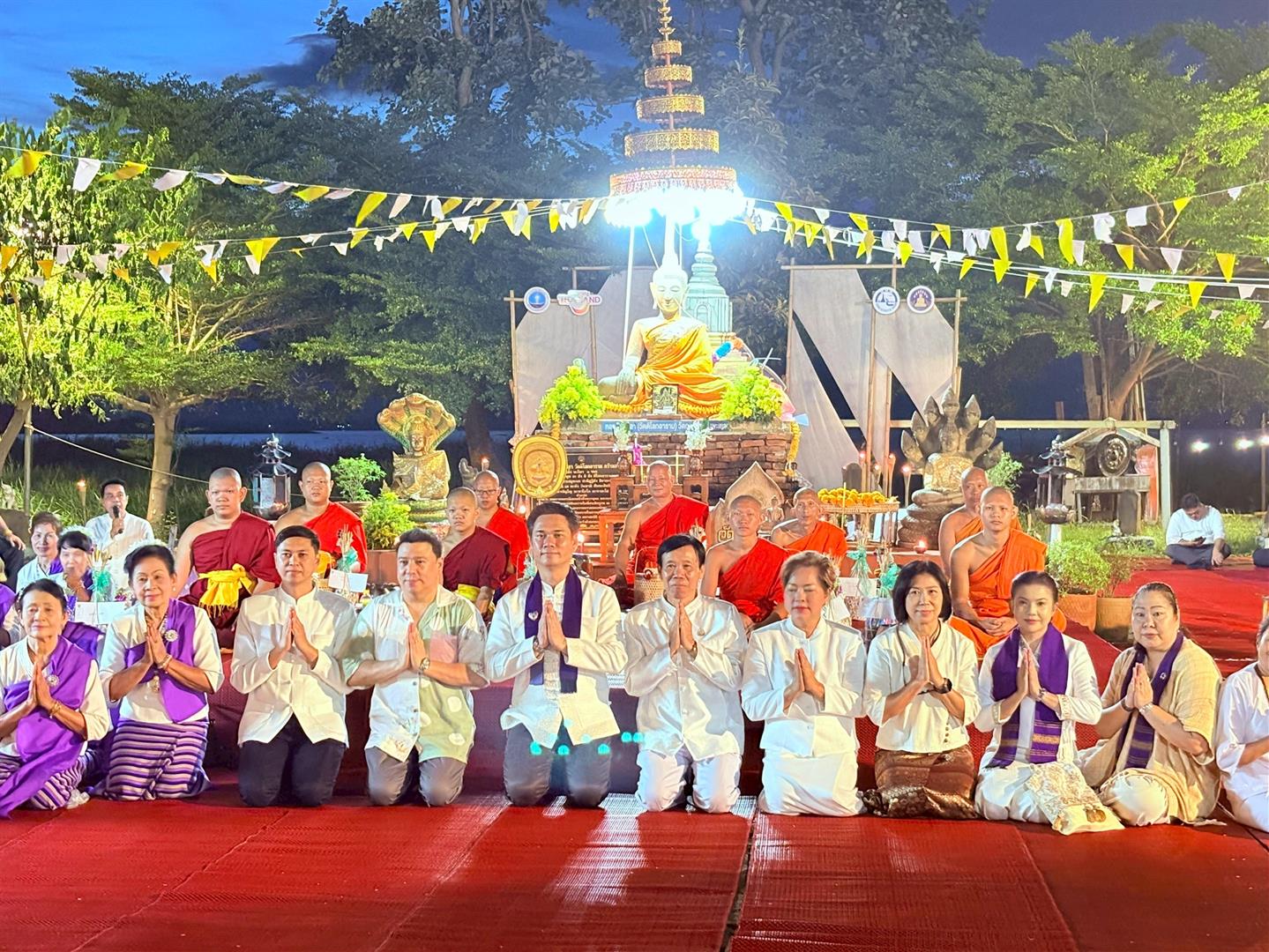
University of Phayao reinforces its commitment to Strategy 4, which focuses on preserving and promoting Thai arts and culture as part of the university's identity. The initiative aims to conserve, revitalize, and elevate local wisdom and cultural knowledge to create sustainable value through Cultural Enterprise, while fostering strong collaboration between the university and local communities in alignment with the Sustainable Development Goals (SDGs).
Traditional Thai cultural ceremony held on the University of Phayao campus University community members in traditional attire during a cultural heritage ceremony
These efforts directly support SDGs 3, 4, 5, 6, 7, 9, 11, 12, 13, 15, and 17, and contribute indirectly to the remaining goals, including:
SDG 3 SDG 4 SDG 5 SDG 6 SDG 7 SDG 9 SDG 11 SDG 12 SDG 13 SDG 15 SDG 17
  • SDG 3 – Enhancing health and well-being through applied public health research
  • SDG 4 – Providing quality education that empowers learners for sustainability
  • SDG 5 – Promoting gender equality through inclusive academic opportunities
  • SDG 6 – Advancing water research and infrastructure innovation
  • SDG 7 – Driving clean energy solutions through academic inquiry
  • SDG 9 – Supporting innovation and sustainable industrialization
  • SDG 11 – Enabling sustainable urban planning through applied research
  • SDG 12 – Encouraging responsible production and consumption patterns
  • SDG 13 – Promoting climate science and adaptation strategies
  • SDG 15 – Conserving ecosystems through environmental research
  • SDG 17 – Building academic partnerships for global sustainable development