Laboratory Chemical Waste Management
The main concept of the system is chemical substance collection — based on ignitability, corrosivity, reactivity, and toxicity — along with proper storage and disposal of waste. The system continues to be improved and developed under the standard of the Enhancement of Safety Practice of Research Laboratory in Thailand (ESPReL), and consists of three steps: waste segregation, waste storage and collection, and waste treatment. To ensure that hazardous waste is handled in a way that protects human health and the environment, hazardous waste containers are provided to all laboratories according to a laboratory request form, which is one category in the university's Hazardous Waste Segregation Manual. In 2026, University of Phayao generated 14.13 tons of laboratory chemicals and electronic waste, decreased from 15.67 tons in 2025. This waste is fully down-cycled and sent to Recycle Engineering Co., Ltd., accounting for 45.79% of the university's total toxic waste.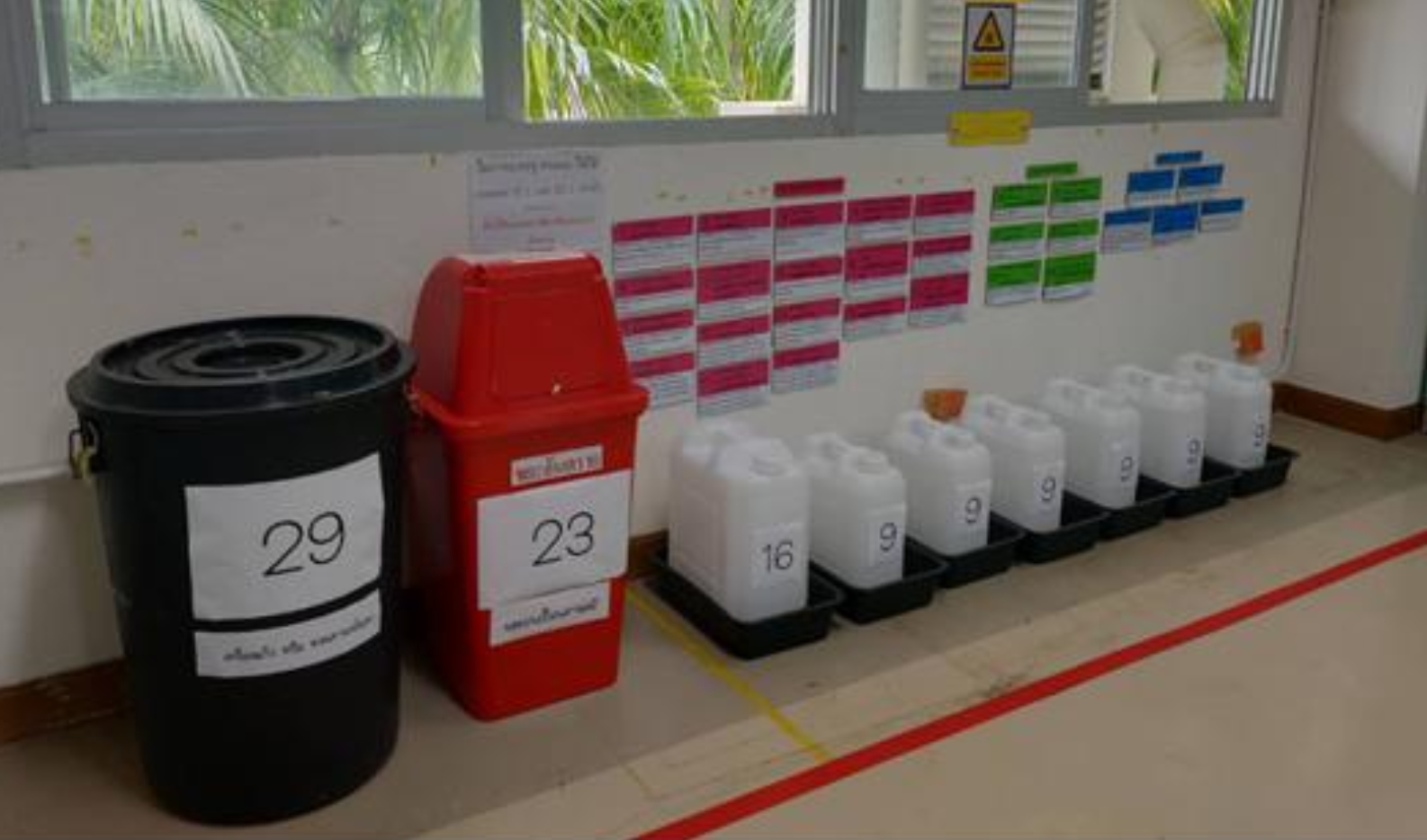
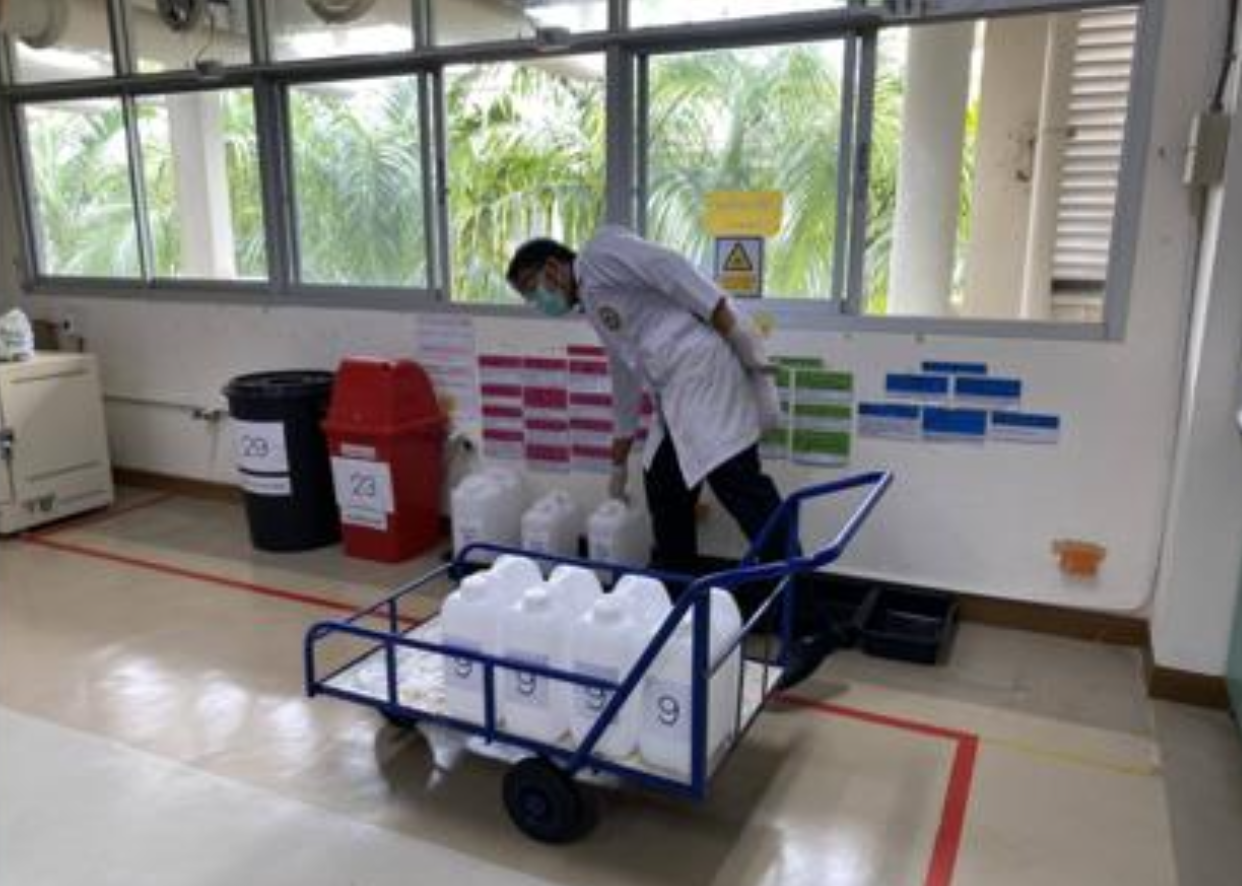
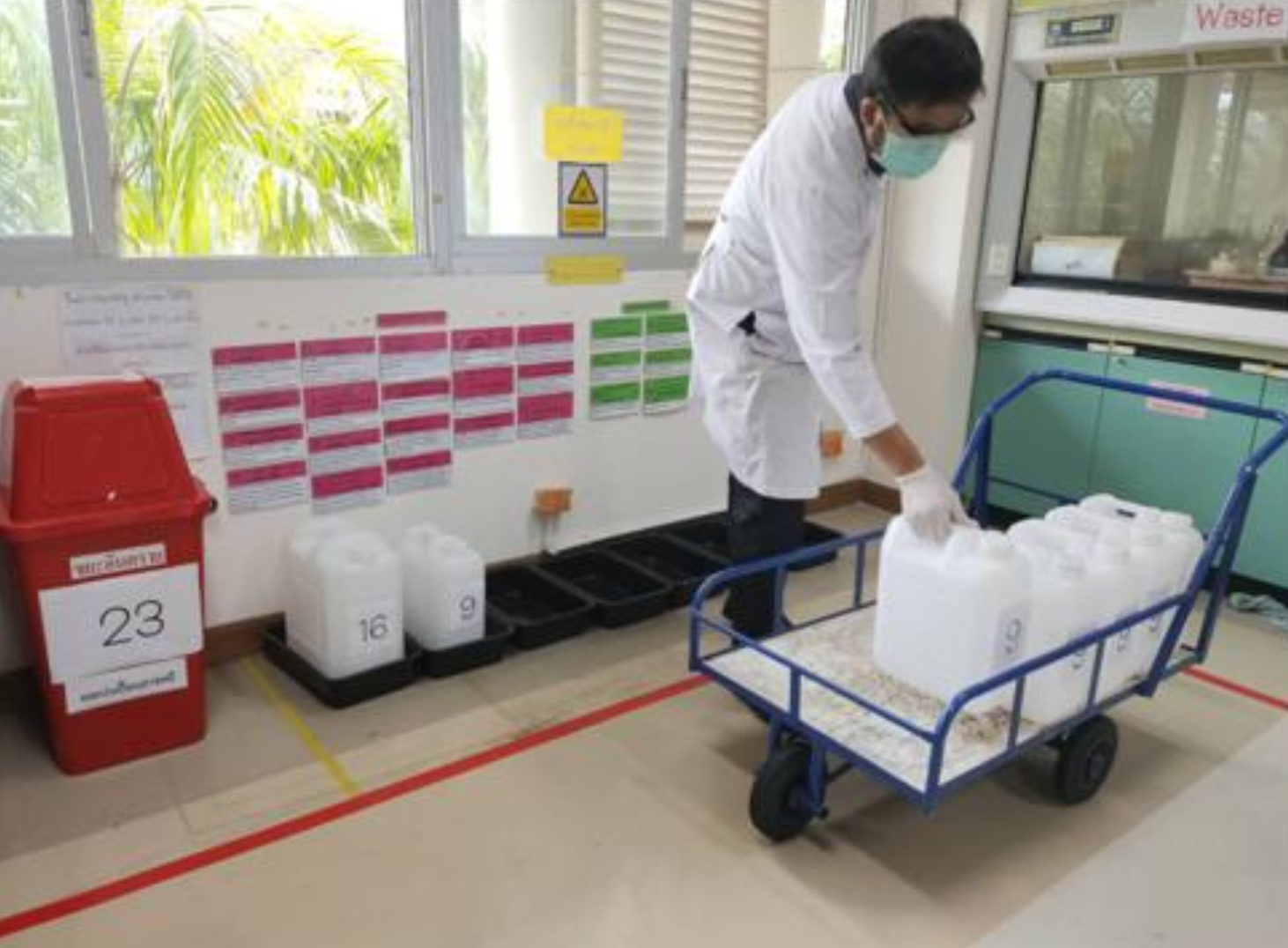
Hazardous waste containers labeled by waste code, collected and transported for storage
| No. | Code | Toxic Waste Type | 2025 | 2026 |
|---|---|---|---|---|
| 1 | 01 | Acidic waste | 0.21 | 0.31 |
| 2 | 02 | Basic waste | 0.85 | 0.78 |
| 3 | 03 | Salt waste | 0.14 | 0.26 |
| 4 | 04 | Containing phosphorus or fluoride waste | 0.1 | - |
| 5 | 05 | Inorganic/Organic cyanide waste | 0.02 | 0.02 |
| 6 | 06 | Containing chromium waste | 0.07 | - |
| 7 | 07 | Inorganic/Organic mercury waste | 0.05 | 0.05 |
| 8 | 09 | Other heavy metal ion waste | 1.24 | 0.89 |
| 9 | 10 | Oxidizing agent waste | 0.15 | 0.24 |
| 10 | 11 | Reducing agent waste | 0.03 | 0.02 |
| 11 | 12 | Combustible waste | 0.04 | 0.02 |
| 12 | 13 | Oil waste | 0.25 | 0.41 |
| 13 | 14 | Halogenated waste | 0.07 | 0.06 |
| 14 | 15 | Organic liquid waste containing water | 1.77 | 1.54 |
| 15 | 16 | Flammable waste | 1.79 | 1.62 |
| 16 | 18 | Explosive waste | - | 0.004 |
| 17 | 21 | Toxic waste | 0.06 | 0.03 |
| 18 | 22 | Organic waste | 0.03 | 0.08 |
| 19 | 23 | Chemically contaminated waste | 6.02 | 5.70 |
| 20 | 27 | Ethidium bromide (EtBr) waste | - | 0.07 |
| 21 | 28 | UNKNOWN waste | - | 0.10 |
| 22 | 29 | Broken glassware or chemical bottles (non-recyclable) | 1.56 | 1.31 |
| 23 | 30 | Acidic waste (status selectable) | - | 0.008 |
| 24 | 32 | Salt waste (status selectable) | 0.016 | 0.006 |
| 25 | 34 | Halogenated waste (status selectable) | 0.03 | 0.02 |
| 26 | 35 | Flammable waste (status selectable) | 0.03 | 0.02 |
| 27 | 36 | Expired organic chemicals (status selectable) | 0.08 | 0.06 |
| 28 | 37 | Other heavy metal ion waste (status selectable) | 0.05 | 0.05 |
| 29 | 38 | Oxidizing agent waste (status selectable) | 0.03 | 0.02 |
| 30 | 39 | Ready-to-use solution (acidic waste) | 0.75 | 0.28 |
| 31 | 41 | Electrical/Electronic equipment | 0.11 | 0.07 |
| 32 | 42 | Liquid pharmaceutical preparations | 0.05 | 0.04 |
| 33 | 43 | Solid pharmaceutical preparations | 0.07 | 0.04 |
| 34 | 44 | Semi-solid or other pharmaceutical preparations | 0.007 | 0.004 |
| Total Waste Quantity: | 15.67 | 14.13 | ||

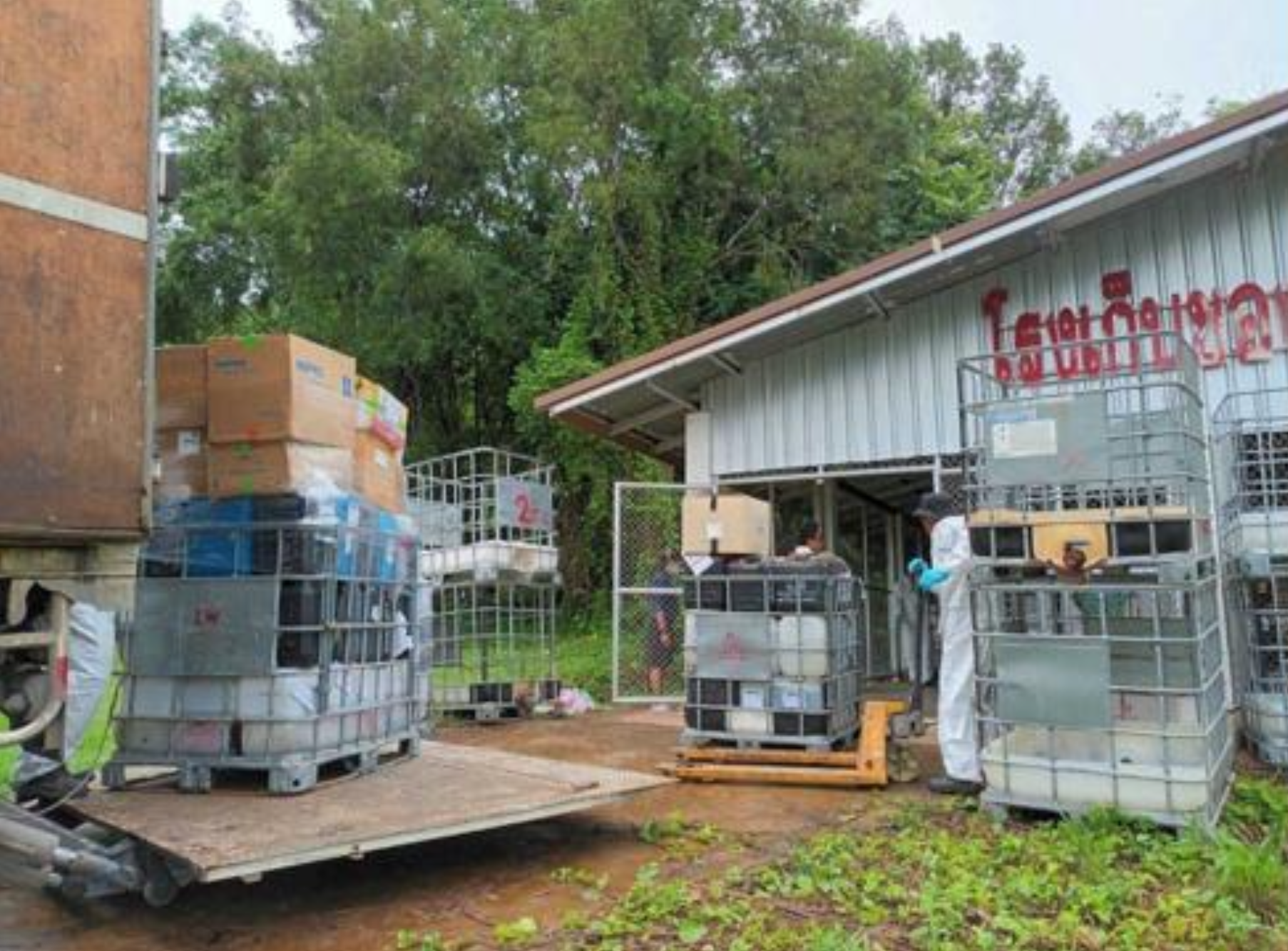

Chemical waste and hazardous waste managed by Recycle Engineering Co., Ltd.
Chemical Hazardous Waste Generation from Laboratory
University of Phayao manages hazardous waste generated from laboratories through onsite treatment, segregation, storage, and regular training. Hazardous waste generated at laboratories — such as BOD waste, TKN waste, acid waste, and base waste — is treated onsite, while waste from workshops is sent to the Waste Bank for recycling. At the storage building, hazardous waste is segregated and collected every 6 months, divided into liquid waste (acid-base, organic solvent) and solid waste (chemical bottles). Hazardous waste management training is provided once a year for both students and laboratory staff.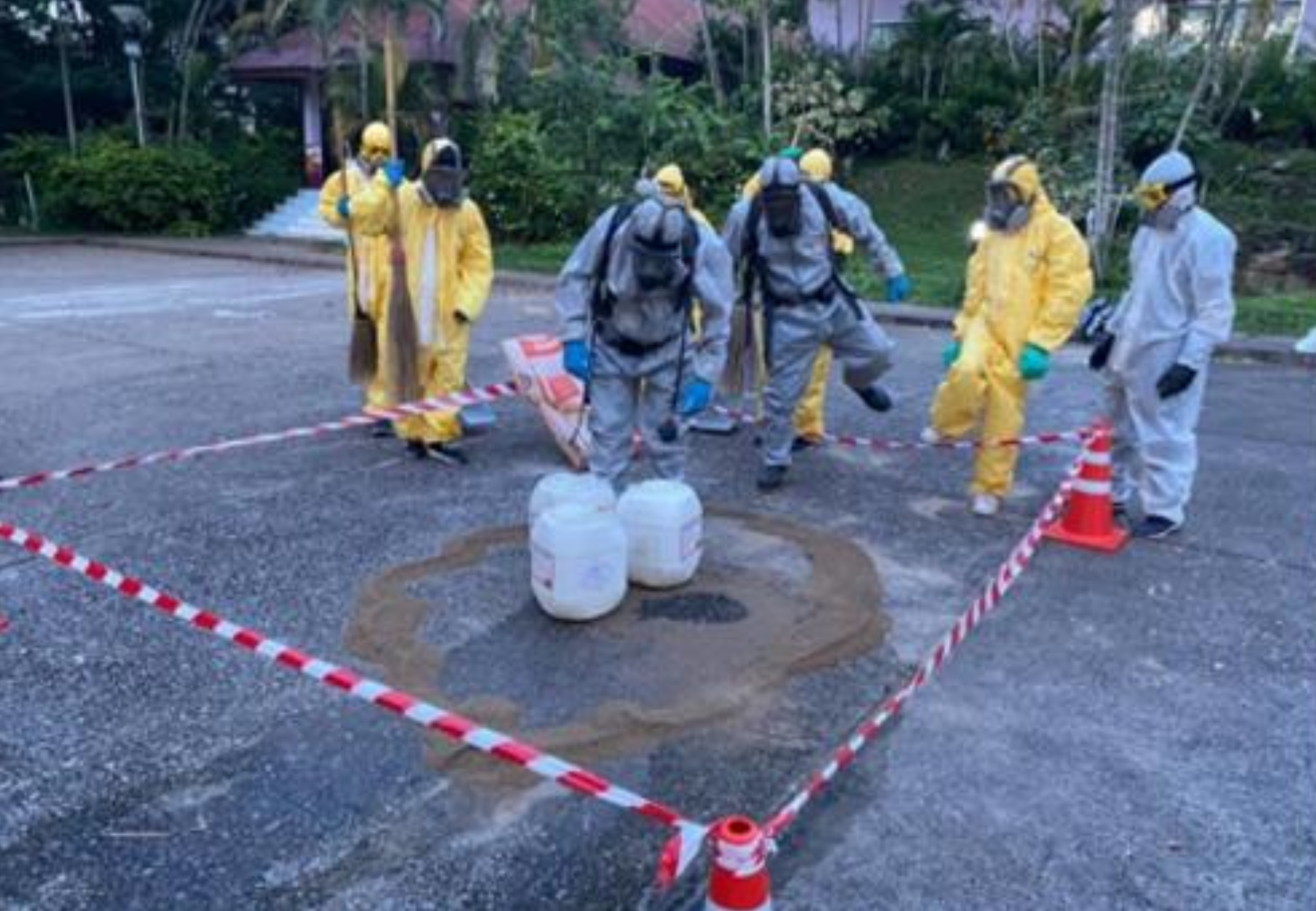
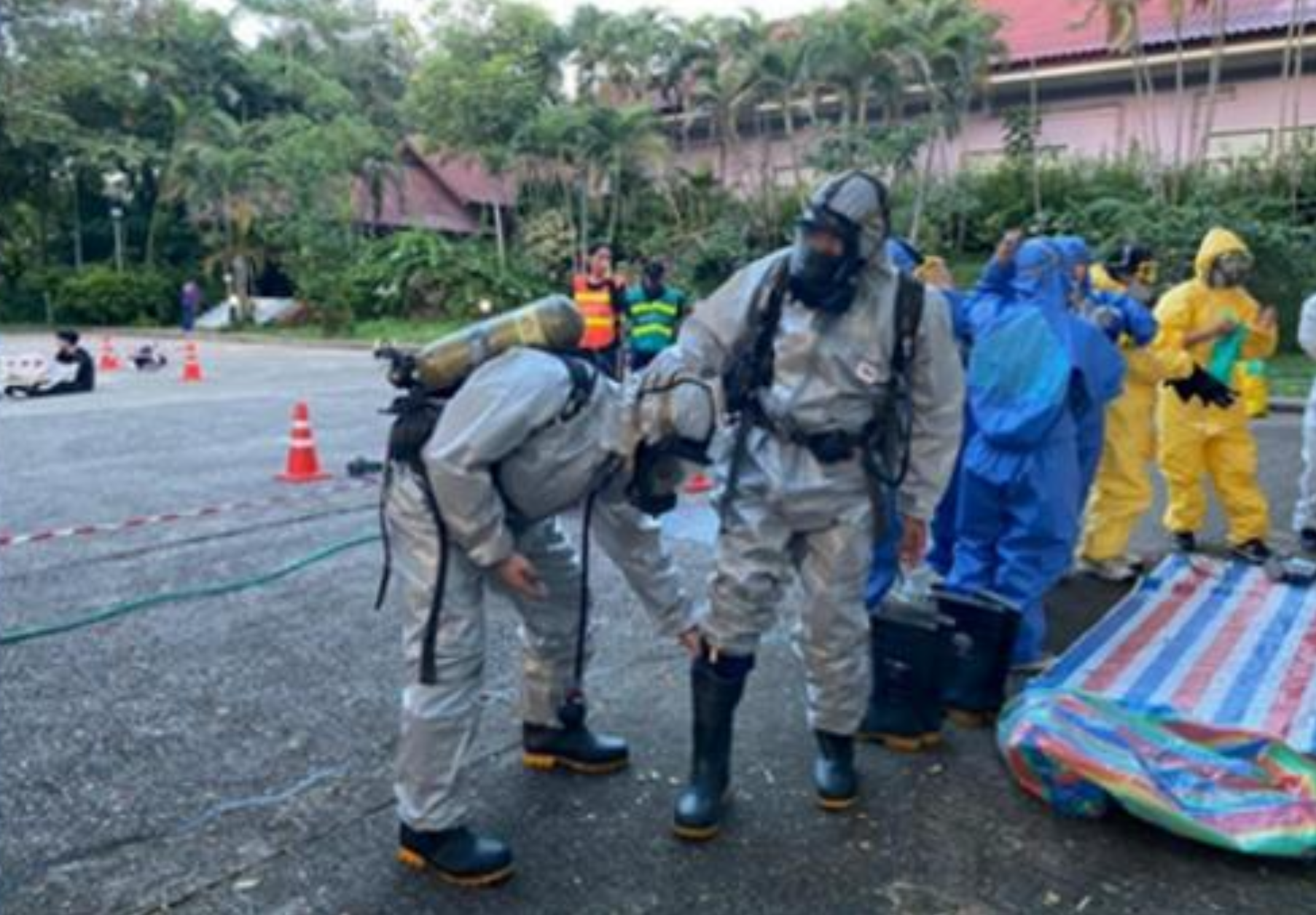
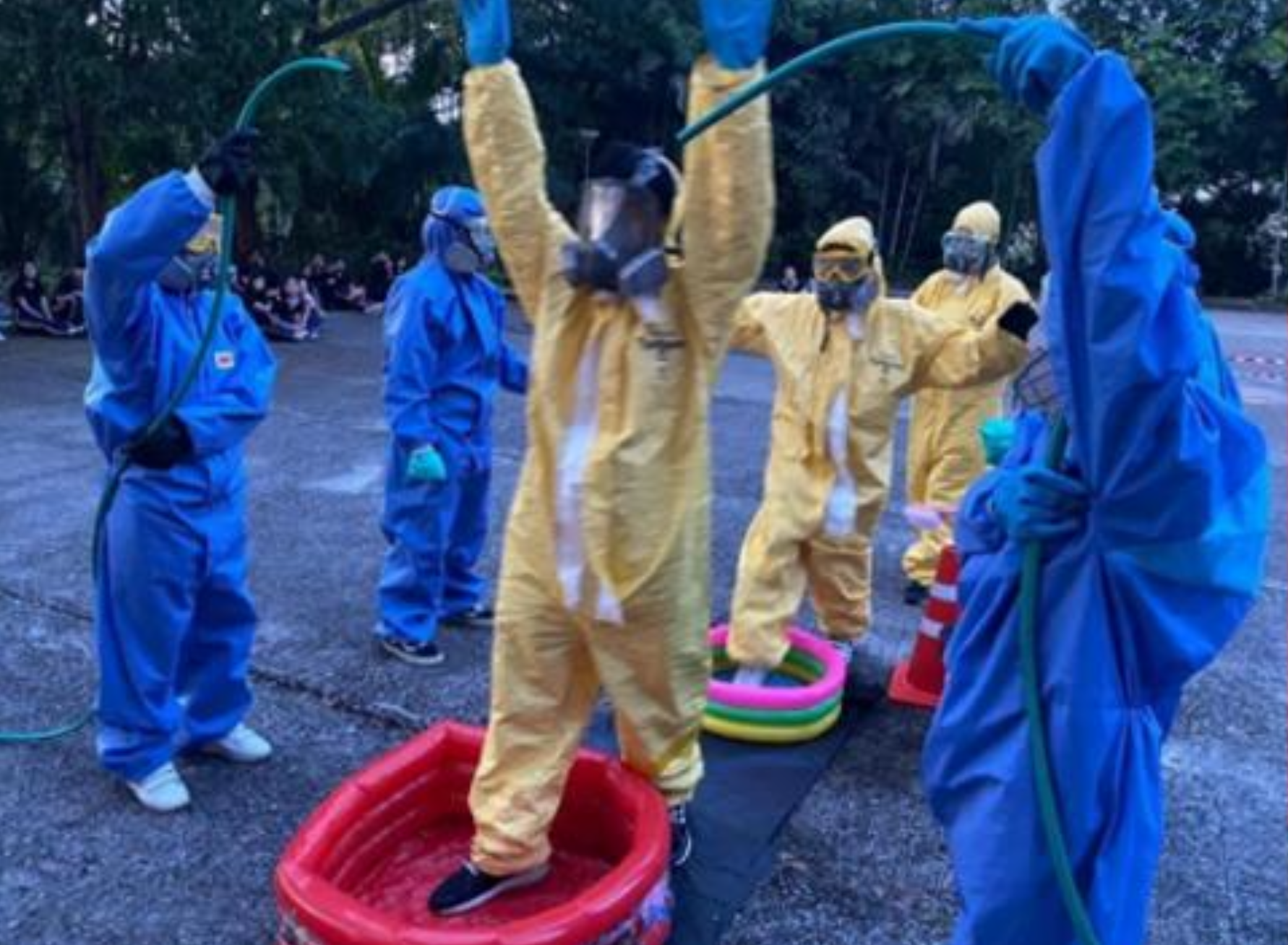
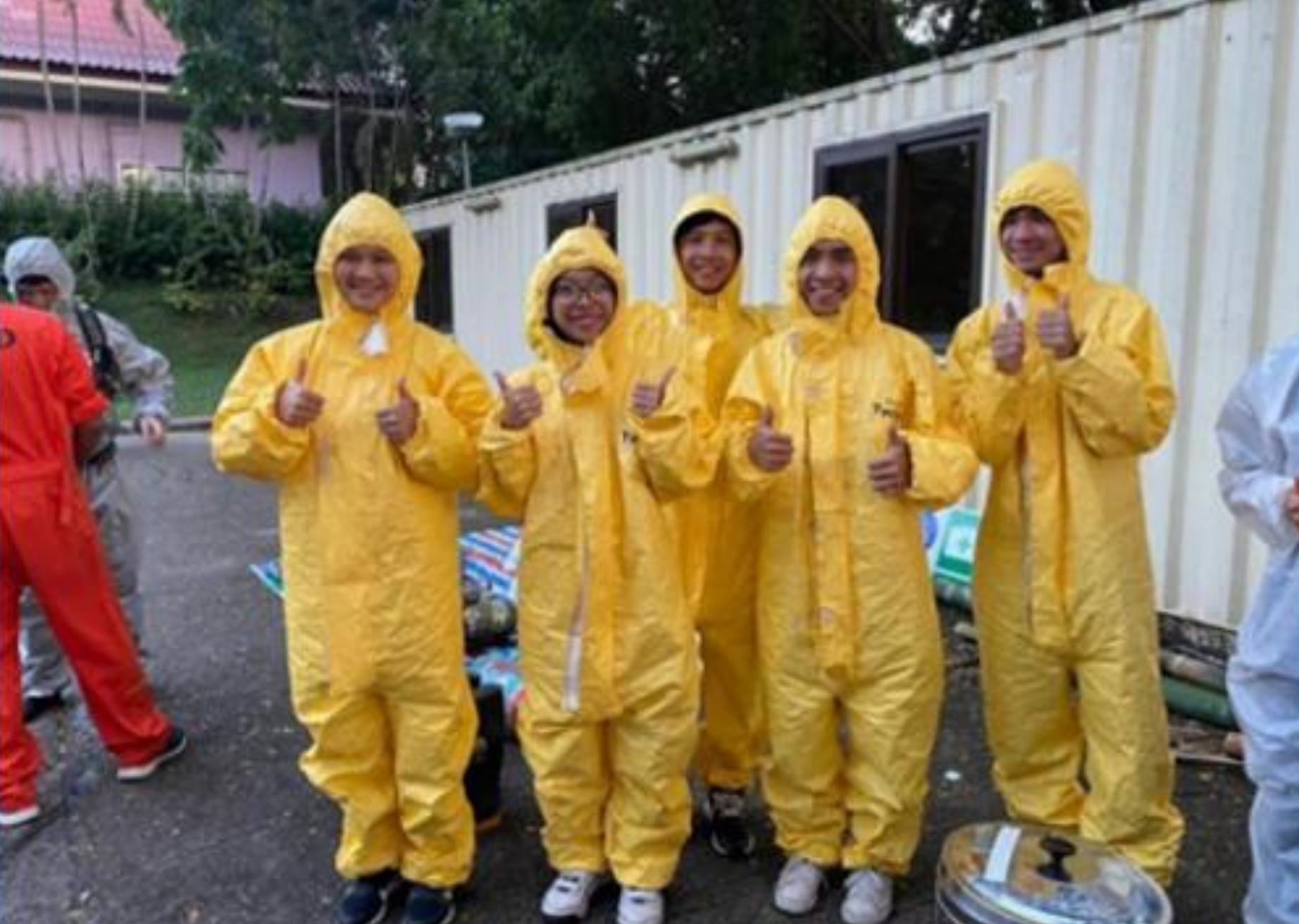
Chemical hazardous waste emergency response training at University of Phayao
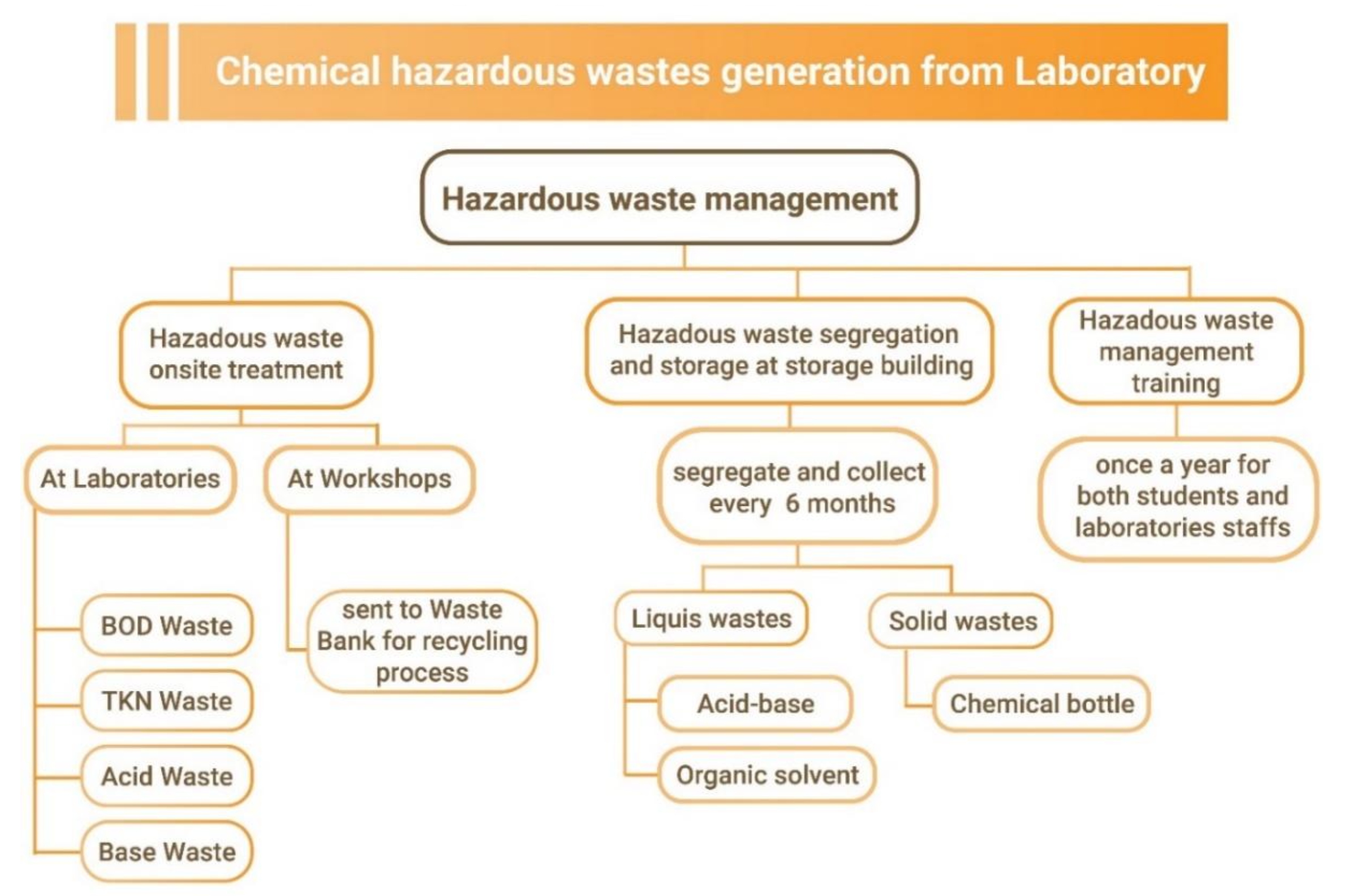
Chemical hazardous wastes generation from Laboratory chart